Sandi Baker: Unexpected readings in a year of unexpectations
One of the unexpected events this year, among the many that occurred and which will still happen in the short space between when this is published and midnight on 31 December 2024, is the change in my reading habits.
I’ve been able to read pretty much any genre or anything, but over the past year or so, I’ve noticed that I haven’t been doing much reading. This came as quite a jolt – I just didn’t seem to have much time. Then I realised that I’d gotten sucked into online shopping and a never-ending oppressive cycle of trying to find the best deal.
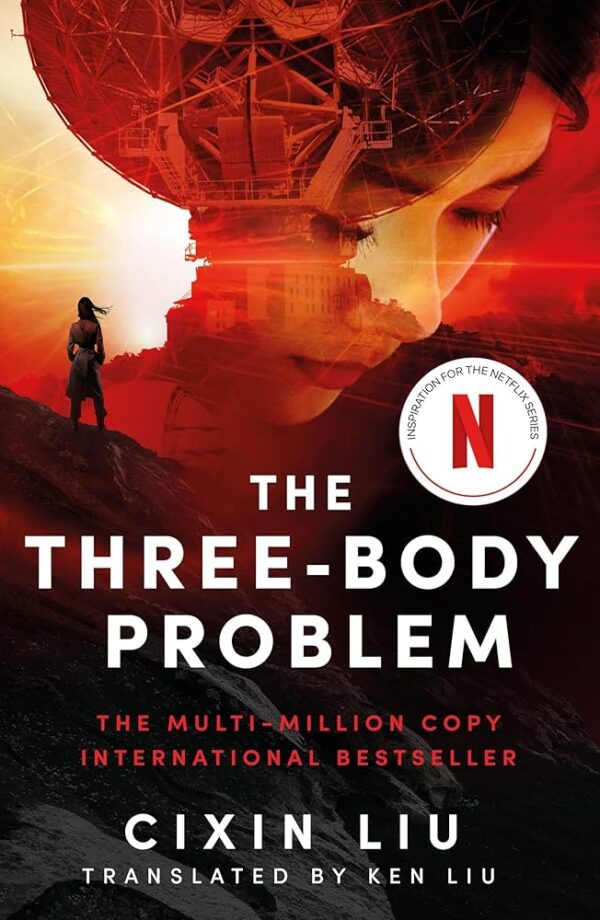
There were two things that happened which broke this cycle: one was watching the Netflix series The Three-Body Problem, based on the trilogy (The Three-Body Problem, The Dark Forest and Death’s End) written by Cixin Liu and translated by Ken Liu and Joel Martinsen. Although Netflix hadn’t recommended it, I was so engrossed in the series that I couldn’t wait for the next series to see how it would end, so I bought the book. And therein lies the rub: the series picks bits from different parts of the trilogy. This meant having to start all over with the first book. And I’m glad that I did. It made me appreciate the quality of the writing, the thinking behind the story and how physics, philosophy, psychology and politics all come together in a comprehensive, detailed way that makes concepts such as the theory of deterrence and behaviour central to the storyline. It is definitely a story that has stayed with me. On a side note, I was quite amazed that a Netflix series could get me to buy a book from a bookstore, and I ended up buying a trilogy of books.
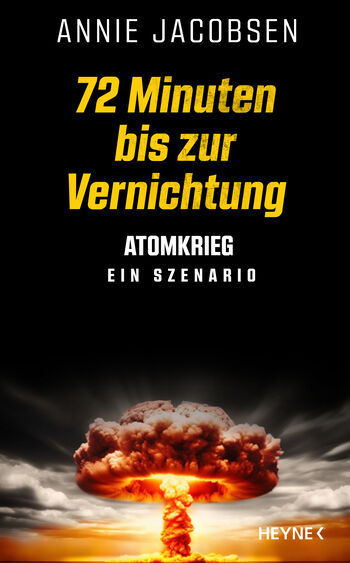
The next thing that happened was while out shopping; I wandered into a bookstore and saw a book titled Nuclear War – a scenario by Annie Jacobsen. Of course, it grabbed my attention as it was also next to Gillian Andersons’ Want – the collection of anonymous sexual fantasies of women from around the world. Absentmindedly rubbing the nub on the cover of Gillian’s book, which seemed designed to be touched, I found myself reading the back cover of Nuclear War and then wondering if this was really something I wanted to read as I was sure it would be a difficult read. The thing is, Jacobsen writes a compelling story, making it easy to read. The subject matter was difficult, but it certainly amplified the theory of deterrence in a more concrete and horrific way than in The Three-Body Problem. It also suggested that The three-body problem might have more to it than being a brilliant work of fiction.
Having survived reading the Nuclear War – a scenario without becoming despondent (in contrast, I seemed to be more equanimous) than before, I then moved on to Annie Jacobsen’s Area 51 – written in 2011, which is testimony to the steady real-life enactment of the theory of deterrence with little to no evidence of UFOs apart from their use as a tool to either control or distract people.
Judging by my newly found readings, it does seem as if there is a common theme which aligns closely with where we find ourselves in 2024 – a world facing increasing insecurity, conflict and uncertainty. And perhaps, this is the reason for these books.
So, as this year of many happenings draws to a close, I can only reflect on the fact that, for me, there is still some joy in reading paper books and learning about new things, whether fiction or fact. More importantly, there is a sense of emancipation in not following social media algorithms or consumer-curated content.
Sandi Baker, now in Germany, has lived in Johannesburg/ South Africa for quite some time. Her articles with us here.
** **
Jon Bassoff: Some more to dark art …
The United States is a wonderful place for reoccurring nightmares as we continue our political march back in time. Thankfully, there is wonderful art to distract! Here are some movies and novels that stood out for me.
Films
Oddity: A great Irish horror film that follows a blind medium as she seeks to find the truth and avenge the death of her twin sister. The set pieces are fantastic, especially the medium’s shop of oddities, and a wooden mannequin becomes the centerpiece of her discovery. Directed by Damian McCarthy and highly recommended.
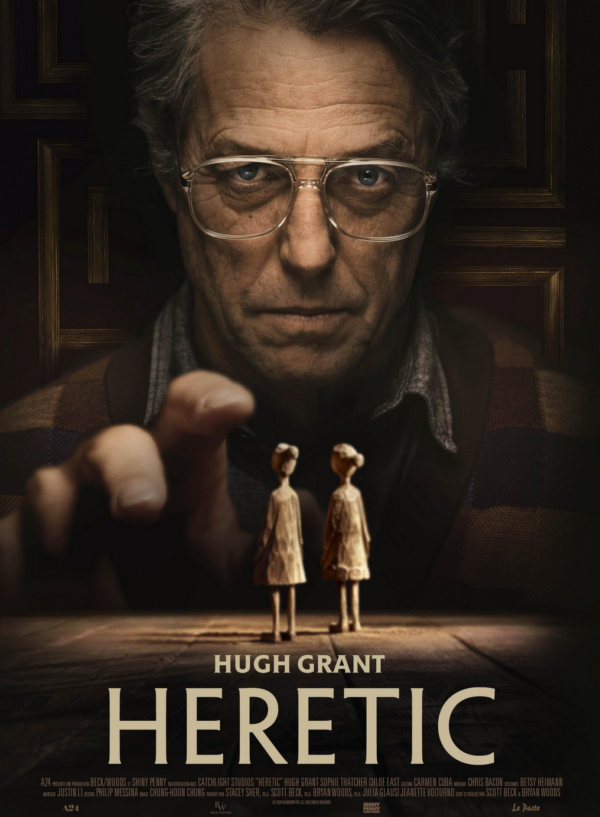
Heretic: It was so great to see Hugh Grant knock it out of the park in this smart horror movie, which makes us question faith and our own assumptions about faith. Even if there hadn’t been any horror there’s plenty of theology to chomp on here. Sophie Thatcher and Chloe East are also both wonderful as innocent (or not so innocent?) Mormons spreading the word.
Novels
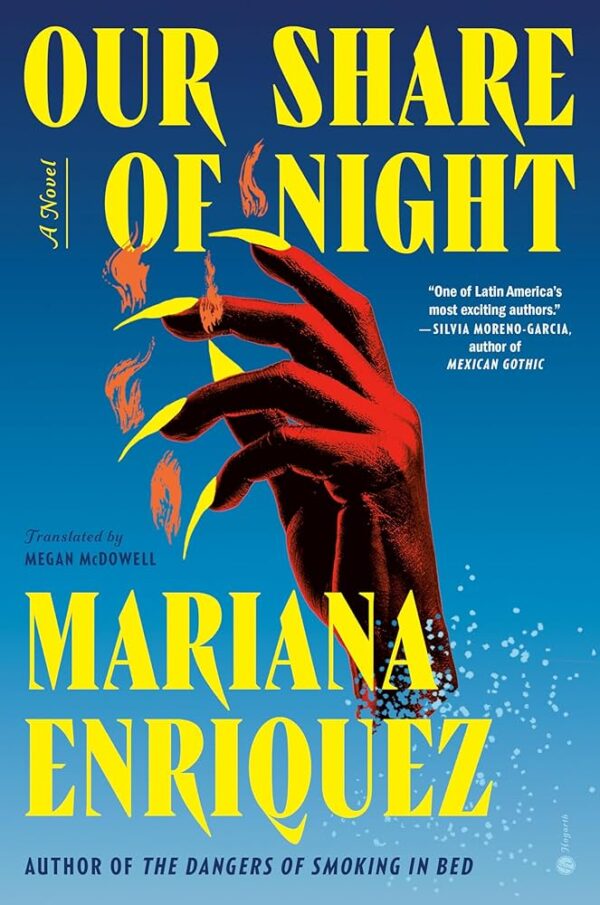
Our Share of the Night by Mariana Enriquez. This is a doorstop of a novel, but it’s beautifully written and incredibly powerful. The focus is on a father and son as they try to escape a demonic cult, and boy does it cover a lot of ground. From the AIDS epidemic to the unrest in Argentina, this is a novel with a lot of ideas, and it succeeds.
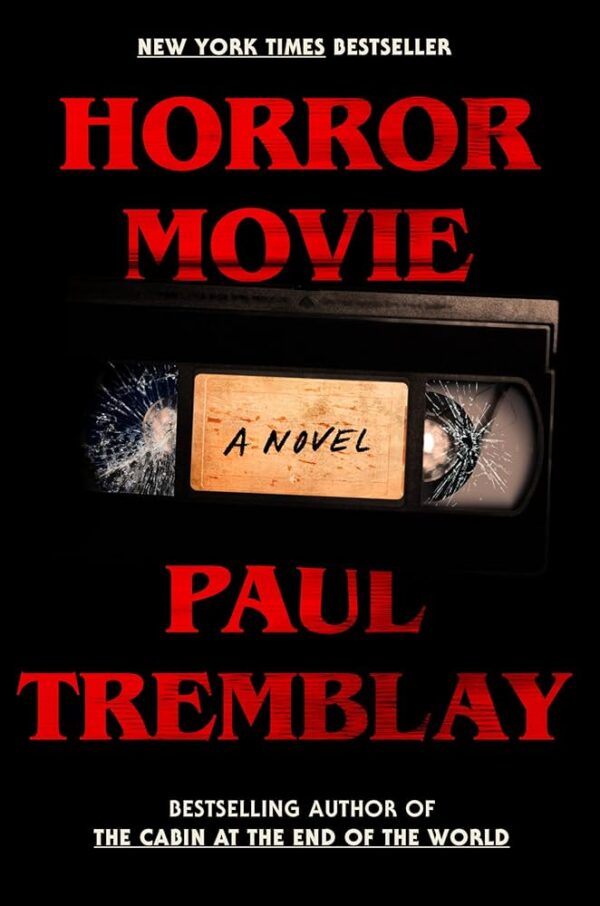
Horror Movie by Paul Tremblay. Tremblay is a master of unreliable narrators and ambiguous endings, and this is one of my favorites of his. It tells the story of a doomed film focusing on the actor who played a murderous character known as “the thin kid” and the eventual blurring of reality and fiction.
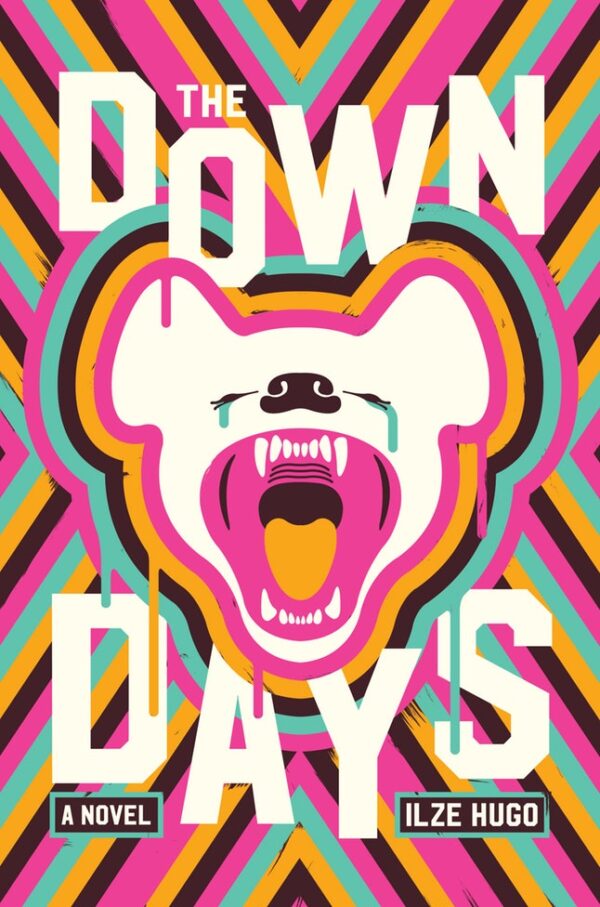
The Down Days by Ilze Hugo: I stumbled into this one because I was beginning work on a novel focusing on mass hysteria. While this novel was written before the pandemic, it was extremely prescient, focusing on how people react when threated with the end times. Hugo is definitely an exciting author, and I’m looking forward to what she writes next.
Here’s to more dark art in the coming year!
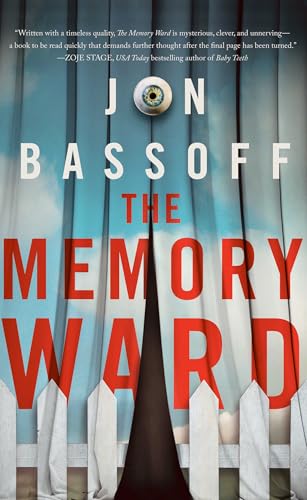
Jon Bassoff was born in 1974 in New York City and currently lives with his family in Colorado. We own him books like The Drive-Thru Crematorium (2019), The Lantern Man (2020), Captain Clive’s Dreamworld (2021) or Beneath Cruel Waters (2022). His publisher in Germany is Polar Verlag, which had Zerrüttung (Corrosion) – review by Thomas Wörtche here, Interview by Alf Mayer here – and the incredible dark and wild Noir Factory Town. March 2025 will see the appearance of his new novel The Memory Ward. His website: jonbassoff.com
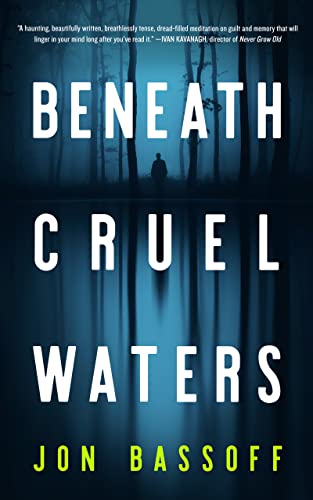
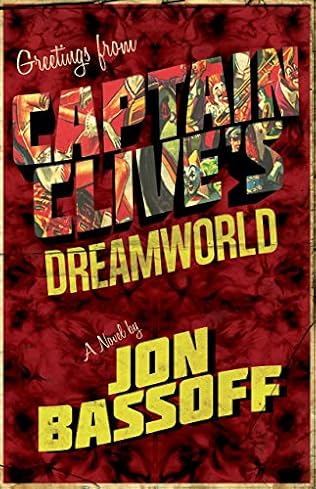
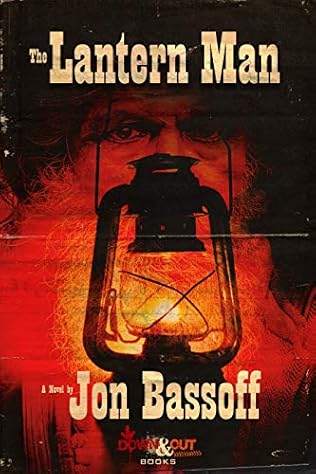
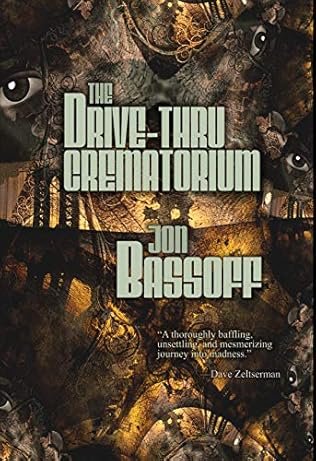


**
Peter Blauner: »Rocco«, and the influence on Scorsese and others
Early in 2024, I was working on a TV show with a bunch of younger writers when one turned to me and asked, “Hey, Blauner, have things ever looked this bleak before?”
I tried to be avuncular and reassuring, talking about how the world has survived plagues, world wars, and the threat of nuclear annihilation and all the rest. But let’s face it, things look pretty lousy right now.
There was some solace in work done by contemporary artists. I very much enjoyed Anora, the latest film written and directed by Sean Baker, who made a heartbreaker called The Florida Project with Willem Dafoe back in 2017. Anora is a funnier, raunchier affair about a stripper from Brooklyn who falls for the son of a Russian oligarch and gets herself in a world of trouble. It has a terrific pace, a star-making performance by the brave young actress Mikey Madison, and an unexpected poignance. See it, but don’t take your mother.
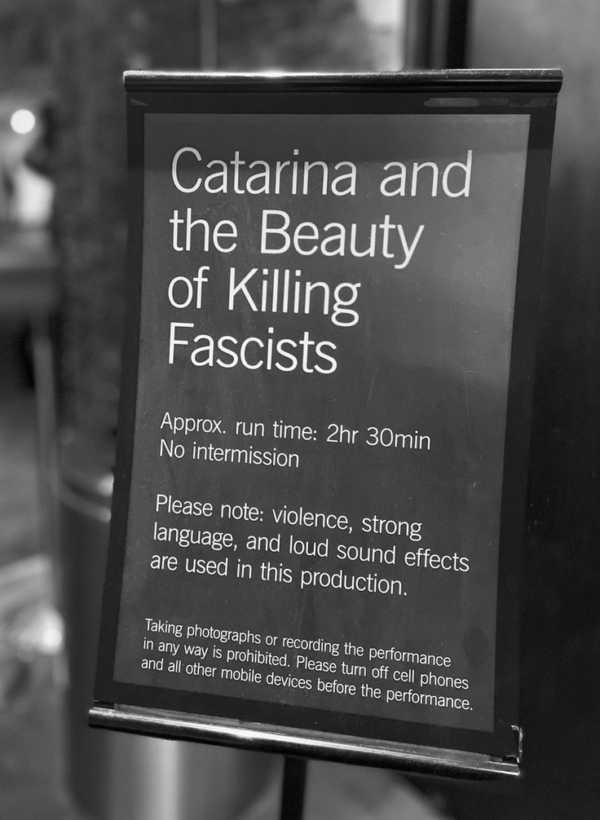
A few months before the U.S. election, I caught an even edgier piece, a play called Catarina and the Beauty of Killing Fascists by the Portugese playwright Tiago Rodrigues. Set in the very near future, a family gathers for an annual weekend at a house in the countryside, conspicuously ignoring one guest in a locked room. Gradually, the audience learns that four generations before, a close family friend named Catarina was slain in the streets by fascists, and an oath of vengeance was sworn. So every year the clan kidnaps a fascist, keeps him captive at the ancestral home, and then kills him at the end of the weekend. If that sounds provocative, it is. Questions of morality and unintended consequence are infused with suspense, intensity, and occasional moments of very dark drawing room humor. On the night I saw it, a violent storm broke out around the semi-covered theater, shocked members of the audience stood up and threw things at the stage, and several people stalked out in outrage.
I don’t think I’d seen a performance like that since James Chance of the Contortions slapped a friend of mine in the face during a performance at CBGB and I clocked the singer in the noggin with a beer mug. That was 47 years ago. Chance died in this past year. So that puts things in some perspective.
I got another kind of perspective by getting to know more about the older films of directors I’d been guilty of neglecting, who also happen to be favorites of Martin Scorsese and Francis Ford Coppola.
I don’t know why I’d never really focused on the movies of Luchino Visconti before. Maybe it was his reputation as an opera director and my ignorance of opera as an art form; I used to think of it as a loud museum. But early in the year, I caught his 1954 film Senso with Farley Granger and Alida Valli (with screenplay contributions from Tennessee Williams and Paul Bowles) and was impressed by the epic sweep and color of its rendering of a 19th century story of a forbidden affair between a romantic Italian Contessa and a manipulative Austrian lieutenant. I also realized that I’ve long been underrating Granger, who also starred in Hitchcock’s Strangers on a Train and Nicholas Ray’s great film noir They Live By Night.
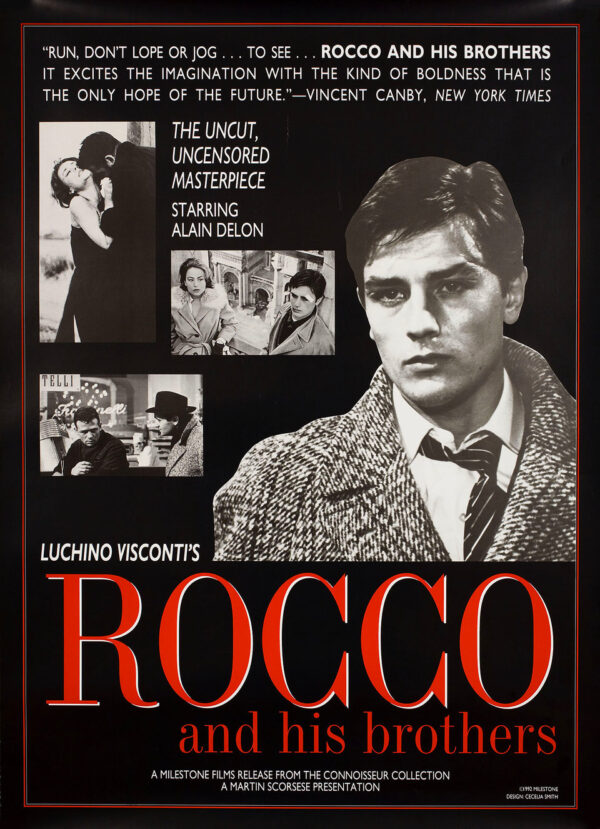
But the knockout is Visconti’s 1960 film Rocco and His Brothers, which stars Alain Delon, Annie Giradot, and Renato Salvatori. It’s the story of a migrant family’s tragic dissolution in post-war industrialized Milan, but it’s a lot more than that. It’s got lust, boxing, sibling rivalry, and a style that somehow melds Visconti’s background as an opera director with the kind of gritty jarring urban hyper-realism we associate with the films Scorsese started making a dozen years later. It’s also obvious from watching it why Coppola calls it a major influence. The Godfather films would not really be possible without Rocco coming first.
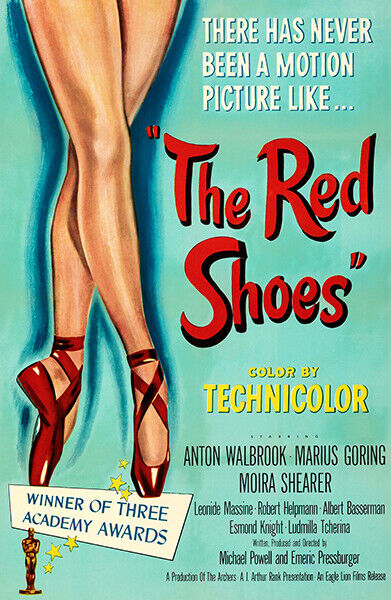
I also rediscovered some of the films made by the English directing team of Michael Powell and Emeric Pressburger, including A Matter of Life and Death (aka Stairway to Heaven), I Know Where I’m Going!, Black Narcissus, and The Red Shoes.
In another era, I might not have responded so much to the duo’s fanciful, often-hallucinatory style. In most of their movies, there are moments when the viewer is not sure whether to take what’s being shown literally – in The Red Shoes, the ballerina’s slippers start dancing on their own. But somehow, in these dark days, the surreal look and heightened emotionalism of these strange films is a kind of relief.
Powell and Pressburger made these movies either during or soon after World War Two. The fact that it was possible to make works of art so wild and high-spirited in the midst of such troubles is something worth remembering as we try to soldier through our current chaos.
Peter Blauner is the author of Sunrise Highway and seven other novels, his most famous maybe Slow Motion Riot, his most recent Picture in the Sand (2023), a contemporary thriller which explores the history of the Middle East and Cecil B. DeMille on the set of his epic film, „The Ten Commandments„. About his time with cop shows on TV here. Alf Mayer on his novel Proving Ground (Text in German). About his career in TV see: Real to Reel: From Slow Motion Riot to Law & Order: SVU.
**
William Boyle: Even as the world tries to beat you down
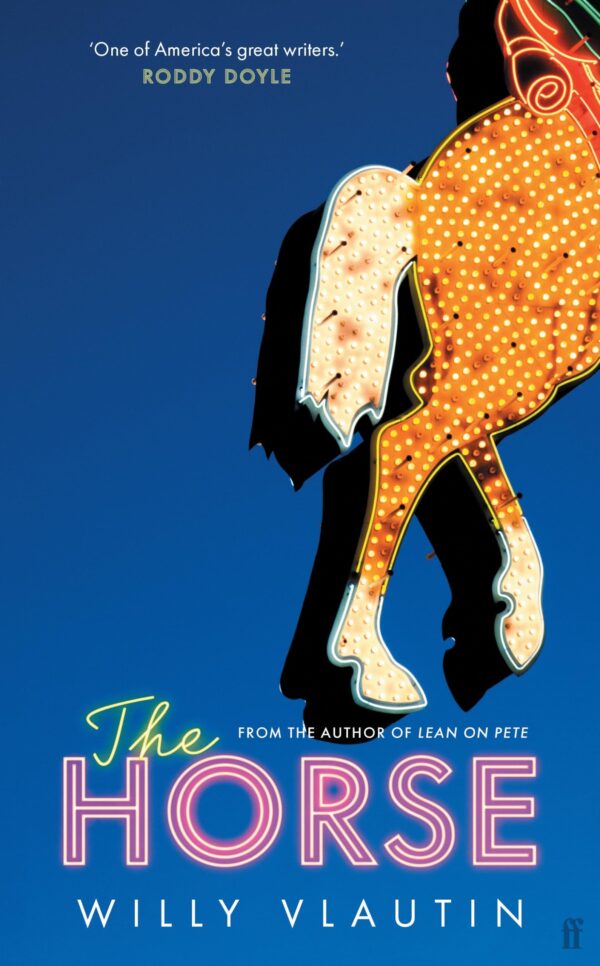
My favorite book of the year was Willy Vlautin’s The Horse. It’s a beautiful heartbreaker about a washed-up casino musician, Al Ward, who encounters an old, blind horse on the abandoned mining claim in a remote part of central Nevada where he lives. In the main action of the book, Al tries to help the horse, while his memory wanders back to his near-successes and failures as a musician. It’ll hit hard for anyone compelled to make art, even as the world tries to beat you down. It’s also great to see Vlautin—for the first time—writing about the life of a musician. You can tell he’s poured a lot of his own experiences and the experiences of other musicians he’s known and worked with into Al’s story.
One of my favorite movies of the year was Rose Glass’s bit of Harry Crews-meets-Bound-in-1980s-New Mexico madness, Love Lies Bleeding. Glass co-wrote Love Lies Bleeding with Weronika Tofilska, and it’s an ambitious, wild, captivating ride. Kristen Stewart plays Lou, living a dead-end existence in a sweaty desert town, operating a gym, worrying over her abused housewife sister, Beth (Jena Malone), and avoiding contact with her old man, Lou Sr. (Ed Harris in creep mode), a crook who runs a gun range and gets into lots of other nasty business. Tension gets amped up when Jackie (Katy O’Brian, giving one of the most memorable performances of the year) rumbles into town, headed for a bodybuilding competition in Vegas. First, she hooks up with Lou’s shit-stain brother-in-law, JJ (an icky, grubby Dave Franco), gets a job at Lou Sr.’s gun range, and then meets Lou at the gym.
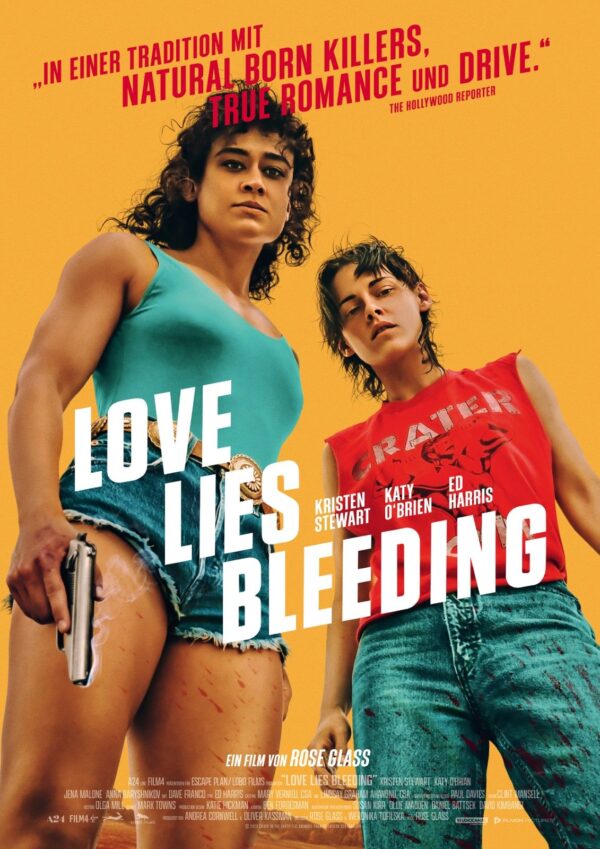
For Lou, Jackie is exciting and dangerous and unlike everyone else she’s known. They fall hard for each other, their relationship instantly full of fireworks. It’s Lou who introduces Jackie to steroids, and things get weirder and darker and funnier from there. Love Lies Bleeding is a tight, strange, and desperate desert neo-noir with knockout performances (I should also mention Anna Baryshnikov, who steals every scene she’s in as the sad and aloof Daisy). Feels like a throwback to primo early ’90s entries in the genre. On my first viewing, I particularly loved the first half, but it kind of fell apart for me a little in the homestretch, though I still admired the big, gutsy swings it took. My second viewing confirmed that I was wrong, that the whole thing holds together beautifully, and I know it’s a movie I’ll revisit often.
I loved many albums this year. Some favorites: Nick Cave and the Bad Seeds, Wild God; Mount Eerie, Night Palace; Ka, The Thief Next to Jesus; Myriam Gendron Mayday; Jake Xerxes Fussell, When I’m Called; MJ Lenderman, Manning Fireworks; Waxahatchee, Tigers Blood; Dirty Three, Love Changes Everything. But I feel like I should highlight the one that came out of nowhere and surprised me the most: Mister Sweet Whisper by Johnny Coley. Coley is a 74-year-old poet from Alabama who lives in a nursing home. There are echoes of David Lynch and Angelo Badalamenti and of William Burroughs on this strange, beautiful record, but Coley has his own rhythms and vision. He talk-sings across dreamy soundscapes. It feels like a transmission from another universe.
William Boyle, author of Gravesend, The Lonely Witness, A Friend Is a Gift You Give Yourself, City of Margins and, most recently, Shoot the Moonlight Out. His German publisher is Polar Verlag – with Shoot the Moonlight Out, Eine wahre Freundin, Einsame Zeugin, Brachland and Gravesend.
In February 2025 comes Saint of the Narrows Street.
** **
John Byron: 2024 Roundup
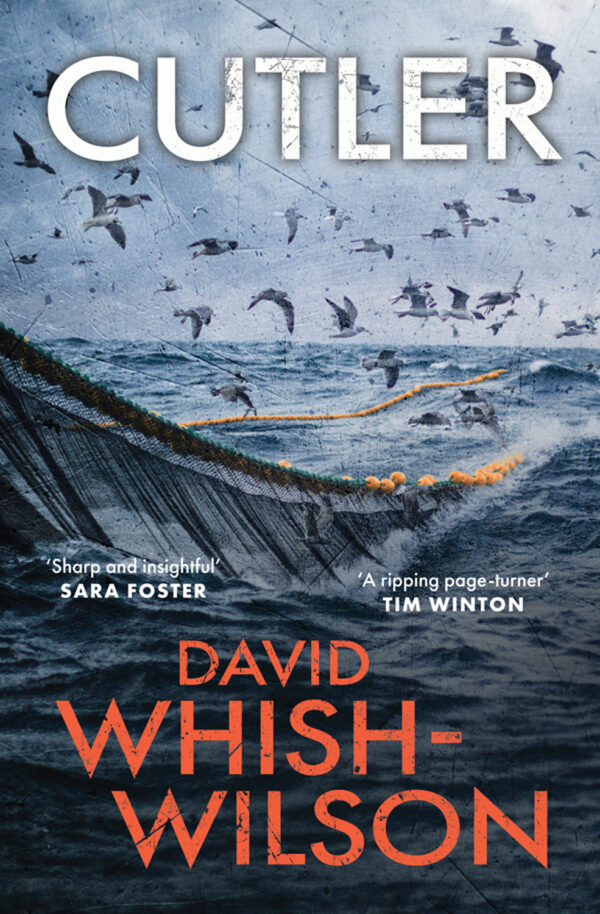
Australian crime fiction kept on producing the goods in 2024. The phenomenal David Whish-Wilson released possibly his best book yet, Cutler, a story of rapacious greed and oppressive slavery on the high seas. Despite that description, it is not a work of historical drama – it’s about the shocking conditions of the all-too-modern mass fishing trade. The eponymous private investigator is looking for a marine scientist who’s gone missing while monitoring the take at sea: despite being a fairly tough, hard-bitten character, even Cutler is shocked by the depravity of truly wicked people doing truly evil things – to fish, sharks, the ocean and their enslaved workforce – well beyond the arm of the land-based law.
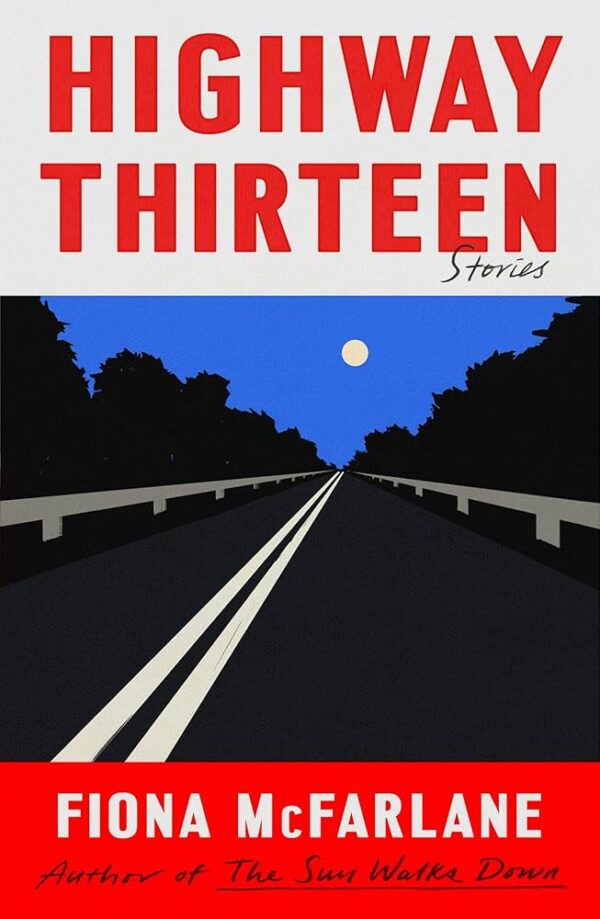
Fiona McFarlane’s remarkable Highway 13 recovers ownership of the narrative for ordinary people from the relentless media focus on a notorious real-life Australian serial killer. In a dozen fictional vignettes, McFarlane imagines the intricate network of lives that intersected with the murderer’s – up and down the years, from before his birth to the present day; from relatives to friends to future victims to those dealing with the ongoing effects of his terrible crimes. Respectful, unflinching, unsentimental yet compassionate – this is how fiction can improve upon true crime, by helping us turn our gaze from the monstrously banal to the tenderly human.
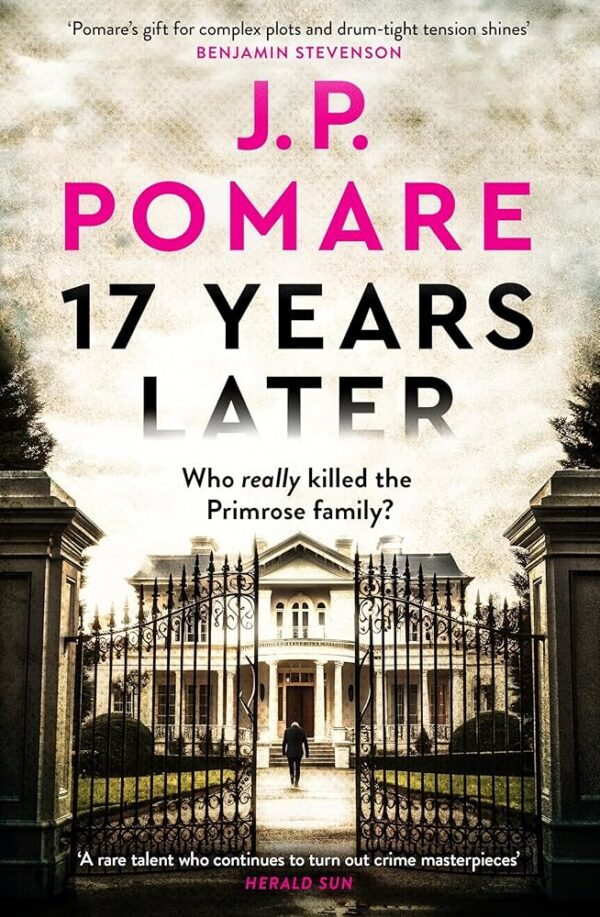
Seventeen Years Later by JP Pomare showed that the king of twists from our part of the world has lost none of his touch. A man convicted of murdering an entire family in their magnificent New Zealand mansion is released at the end of his sentence, and the (initially) prurient interest of a true crime podcaster from Australia opens old wounds in the remote town. The intersecting plotlines are carefully drawn, and their inevitable intersection brings Pomare’s finely textured characters into a deeply satisfying head-on collision. Fifty pages from the end I really didn’t see how JP was going to pull this one off without colouring outside the lines, but he lands it beautifully without any cheating at all.
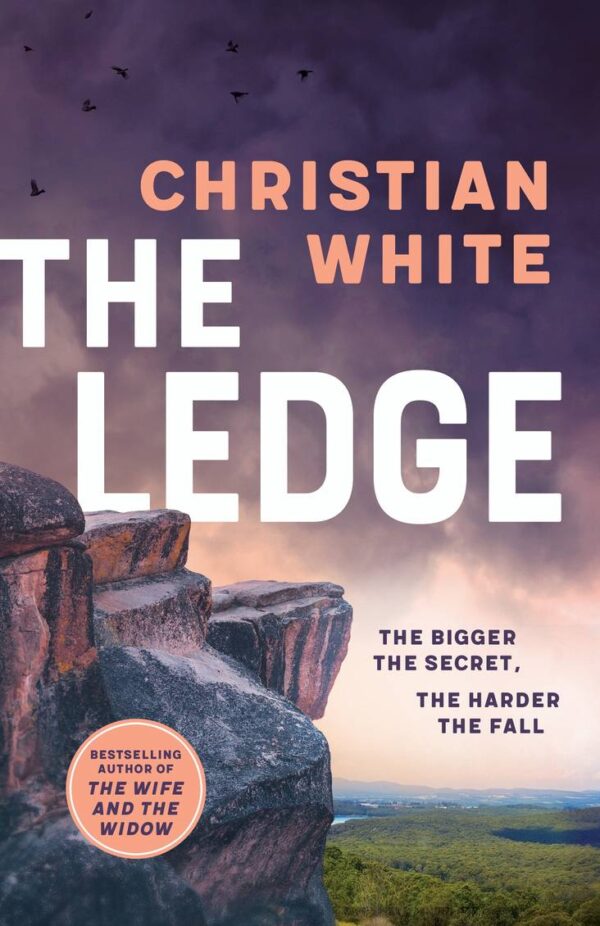
Josh’s old mate Christian White also produced a ripper of a twist in his fourth novel, The Ledge. A teenage tragedy finally catches up with a small (n-1) group of former friends, now in early middle age, when surveyors unearth a long-buried skeleton in a Victorian state forest. The story is told in the two time-tracks of then and now, to brilliant effect. The revelation of the massive twist is vertiginous stuff –when the penny drops you’ll want to go back and re-read the whole book with your entirely new perspective.
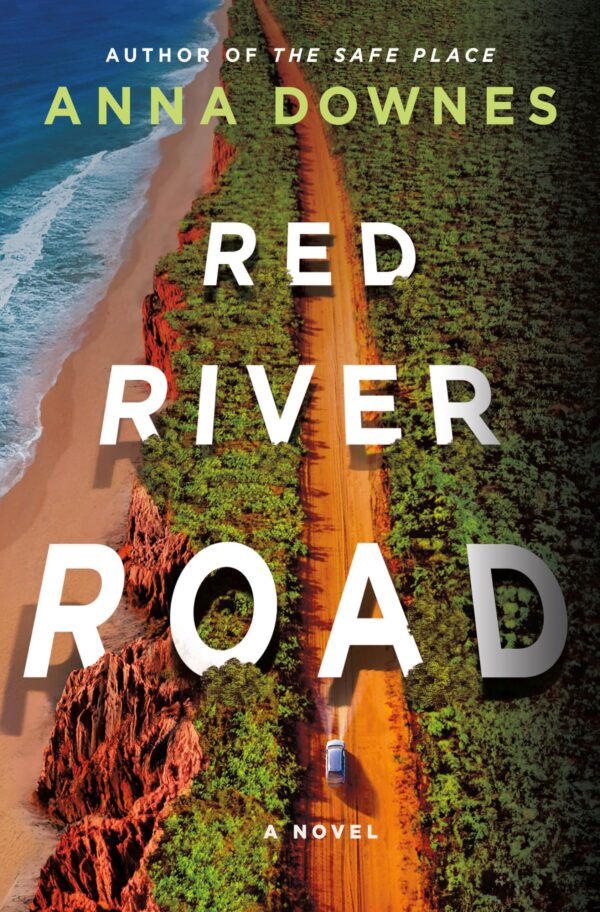
Another twisty gem was Anna Downes’s Red River Road, a psychological thriller that teases with the outback serial killer trope before taking us in a much more familiar and all too plausible direction. Set on the highway that skirts the spectacular coast between Perth and North West Cape in Western Australia – from the Pinnacles to the pink lake, from Dynamite Bay to Ningaloo Reef – it’s worth reading for the scenery alone. The tense, half-trusting relationship between two women in quite different kinds of trouble is well drawn, and their two strands resolve with a coincidence that would ordinarily stretch credibility, but that is actually quite plausible in this sparsely populated but heavily touristed part of the world.
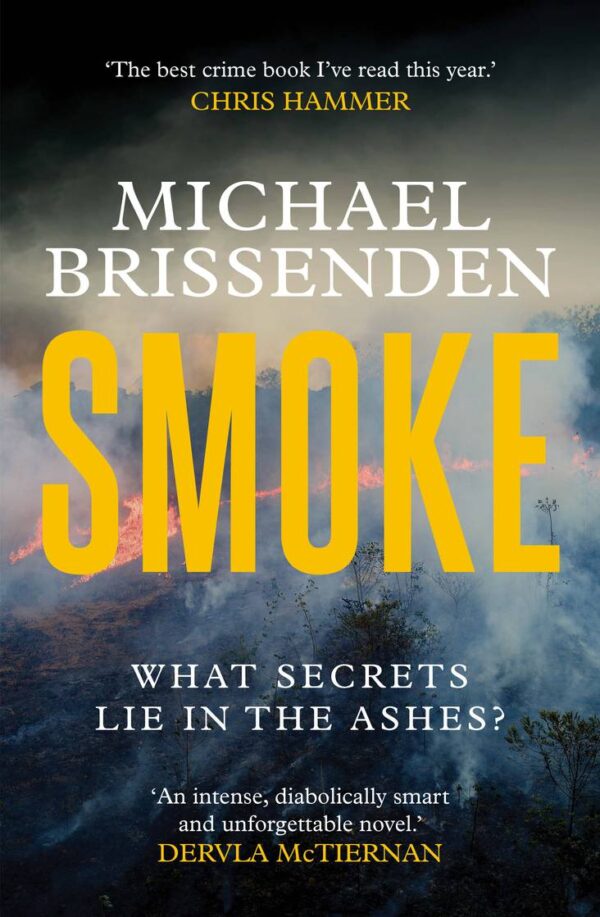
Michael Brissenden was a familiar face on Australian television until his recent retirement, as a longtime reporter and political correspondent for the ABC, the national public broadcaster. He’s been spending his leisure hours well. His new novel Smoke explores the explosive intersection of interests in an old lakeside logging town in transition in the Californian hinterland, where property is becoming too valuable to live in. A body is discovered in the aftermath of a wildfire, and the investigation that follows unleashes old enmities and resentments and the ruthlessness of very new money.
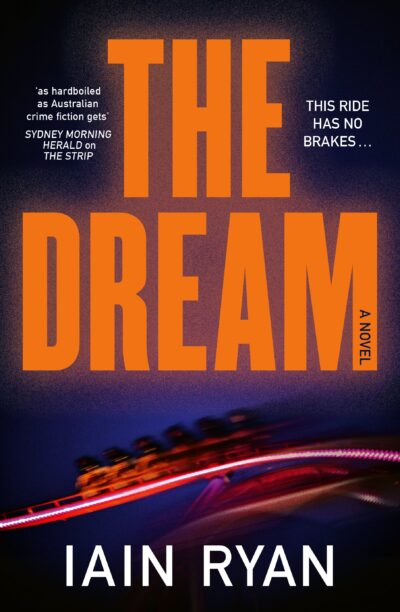
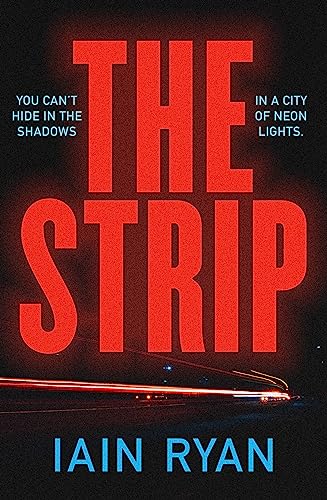
Iain Ryan published two novels in quick succession this year, The Strip and The Dream, loosely connected by a minor character or two but intimately entwined by their immersion in the foetid, stinking mire of corruption that was early 1980s Queensland – in this case, the property development wild west of Surfer’s Paradise and the Gold Coast. The beachside flesh trade, illegal gambling, illegal drugs, illegal abortion, dirty coppers, dirtier politicians, bribery and extortion, organised murder, tacky nightclubs, canal-side mansions built with stolen money, brown paper bags full of cash, 44-gallon drums full of bodies – there’s something rotten here for every taste. You can practically smell the coconut oil, Brylcreem and gun grease.
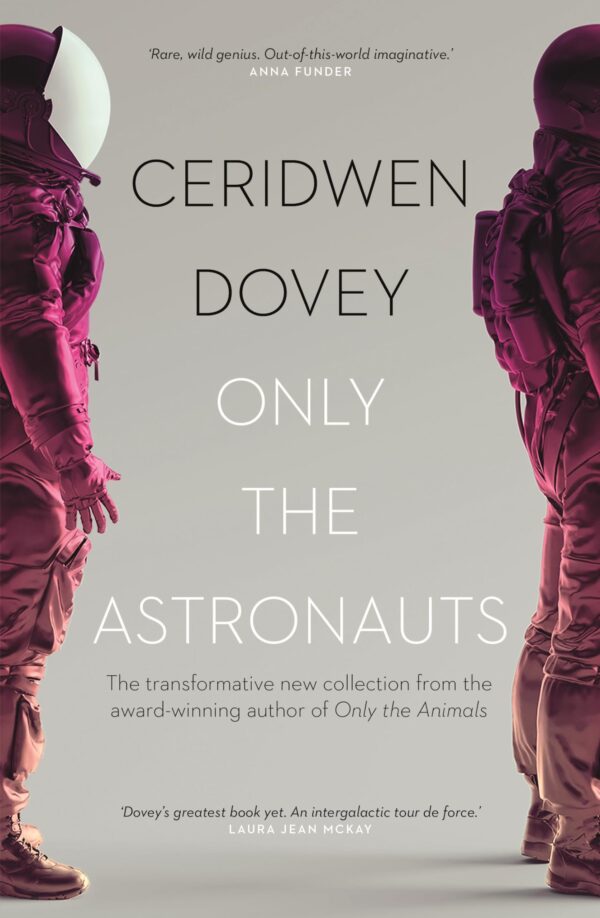
There were many great Australian releases this year beyond crime fiction, but I only have room here for three. Ceridwen Dovey’s Only the Astronauts is a successor of sorts to her runaway success Only the Animals of a decade ago. This time she inhabits the perspectives of inanimate objects in space, from a mannequin in a car orbiting the sun, to the International Space Station circling the earth, to the Voyager spaceship at the outer reaches of the solar system. It sounds outlandish, but it’s surprising how much of it is reality-based – the mannequin and the car are really up there, shot into orbit by a certain very wealthy and suddenly very politically powerful man; and the musings of the ISS about the humans within and the planet below are as insightful as any in Samantha Harvey’s Booker Prize-winning Orbital.
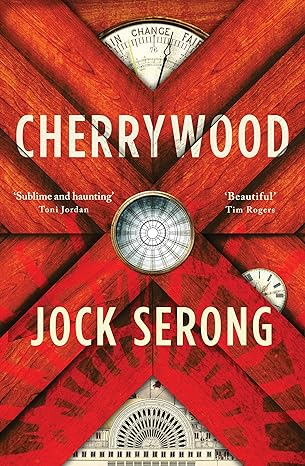
Veteran Australian crime writer Jock Serong produced a quite different offering in Cherrywood, a dreamy, magical realist account of the various fortunes of a shipment of gorgeous Eastern European lumber, and its devoted custodians. In an historical strand that evokes Peter Carey’s Oscar and Lucinda and Werner Herzog’s Fitzcarraldo, the cherrywood of the title is instrumental in the descent and ruin of a rich but clueless Scottish businessman who succumbs to a fever dream of success in the new colony of Melbourne, in the form of a spectacular wooden paddle-steamer for Port Phillip Bay. In the modern day, a disillusioned lawyer stumbles on a strange pub in the inner Melbourne suburb of Fitzroy, a building of wood that glows richly alive and hovers an inch above the ground, staffed by people not quite of this world. Oh, and the pub moves randomly around the suburb, keeping ahead of the bailiffs who are trying to repossess the precious, possibly cursed and certainly possessed timber from which it is made.
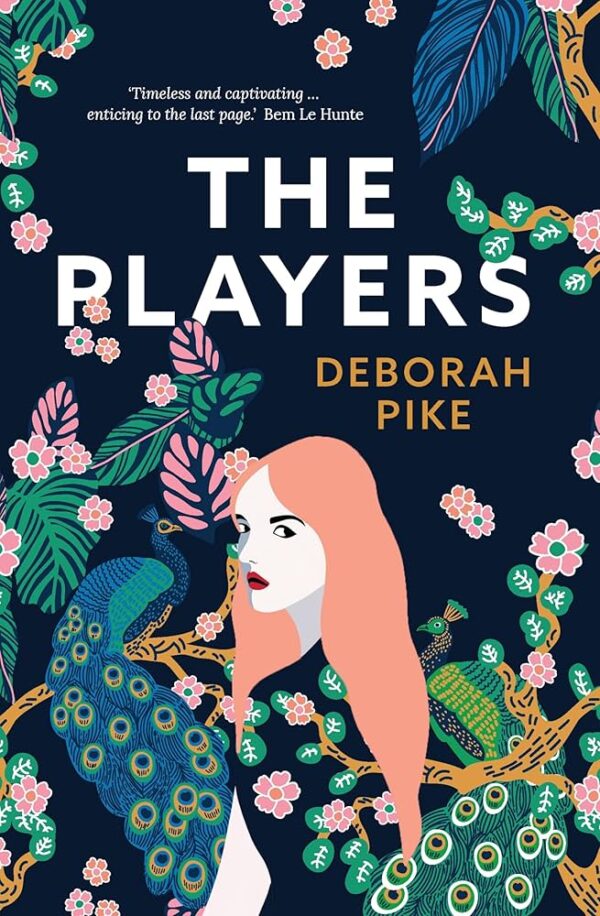
The Players is the debut novel of Australian literary scholar Deborah Pike. A group of young people spend a short but intense period together rehearsing a production of The Marriage of Figaro by Pierre Beaumarchais, the 1784 comedy immortalised in music by Mozart two years later. This vivid season of experience proves to be foundational to all their lives, as they fumble their way into and through adulthood, as mystified by their own desires and values as they are by an indifferent and illogical world. Drawing deeply on her upbringing in Western Australia, Pike has captured the wild beauty of the West Australian landscape, its way of seeping into your being and transforming how you move through it in both space and time. Scenes in London and Paris are equally evocative of the particularities of those cities, of how it is to live in them young, passionate, adrift and poor. By turns amusing and serious, emotional and intellectual, quotidian and profound, this novel is also exquisitely well written on the line, with the lyricism of a lifelong, dedicated, thoughtful reader and teacher.
And that’s just the Australians! I don’t have room here for any kind of international survey, but the 2024 offshore crime and crime-adjacent offerings I have enjoyed include two from alumni of The Wire’s all-star writing room, George Pelecanos’s Owning Up and Richard Price’s Lazarus Man; Robert Harris’s historical novel Precipice, based on the real-life, shockingly negligent correspondence between British Prime Minister HH Asquith and his young friend Venetia Stanley on the cusp of World War I; Nick Harkaway’s confident tread in the footsteps of his father, the late John Le Carré, with Karla’s Choice, a satisfying infill of George Smiley’s years between The Spy Who Came in from the Cold (or, strictly speaking, his brilliant satire The Looking-Glass War) and Tinker Tailor Soldier Spy; Don Winslow’s cataclysmic finale to both trilogy and career, City of Ruins; and former FBI Director James Comey’s Westport, a solid follow-up to last year’s convincing Central Park West.

And since the prospect of starting up a nuclear power industry in Australia is back on the political agenda here, TJ Newman’s Worst Case Scenario is particularly timely – an account of what happens when something really big drops out of the sky onto a nuclear reactor and its waste facility, the novel’s first 60 pages alone should make anyone think twice, especially in a vast country with all this free sunshine and wind.
John Byron grew up in Sydney and lives in Melbourne. He is the author of The Tribute, reviewed by Alf Mayer in this magazine in May 2022. This outstanding thriller is his first novel and was shortlisted for the prestigious Victoria Premier’s Literary Award for an Unpublished Manuscript in 2019.