Cormac McCarthy, Harley Davidson and the Marlboro Man
Like many literary-minded folks, I burned through Tracy Daugherty’s new Cormac McCarthy: A Legacy Revisited over the weekend. I suspect the bulk of the impending online discourse over the biography will center on McCarthy’s Gnosticism (which the one and only Aaron Gwyn has broken down previously), his relationships (the book delves hard into the whole Augusta Britt situation), and whether The Passenger was a completed book or a pile of fragments smashed into a manuscript (Knopf doesn’t like what the biography has to say about that one).
I’m not here to touch on any of the high-minded analysis, or dig into the mud of McCarthy’s personal relationships; instead, I want to focus on the last thing I expected the great author’s life to touch on:
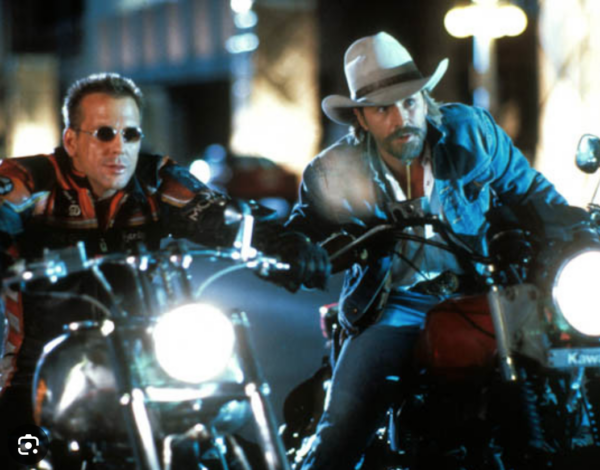
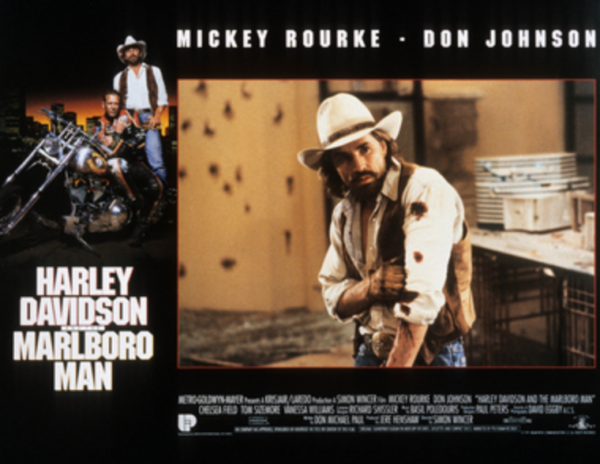
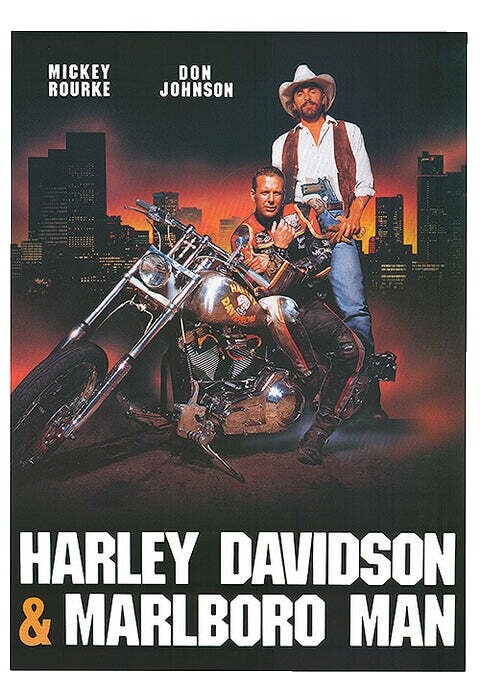
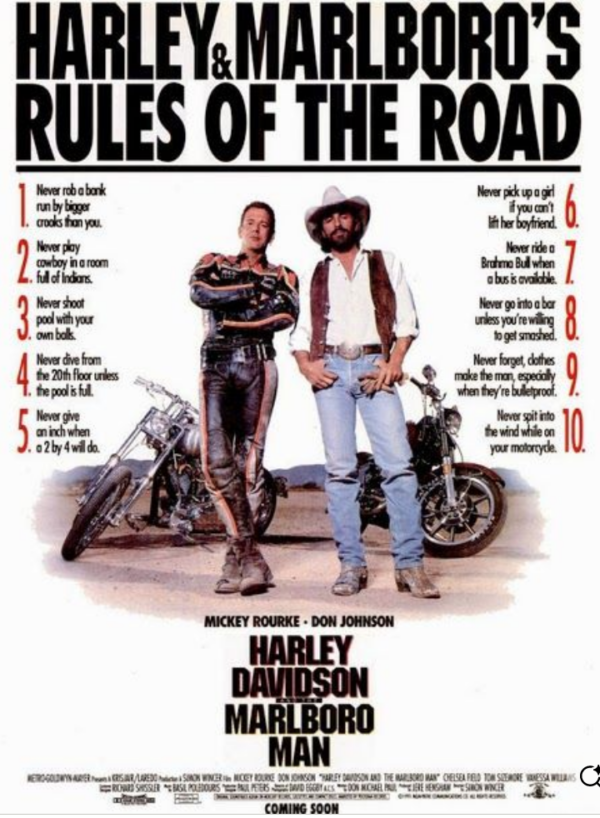
Harley Davidson and the Marlboro Man.
Yep, the 1991 cinematic abomination starring Mickey Rourke in peak motorcycle-drifter mode and Don Johnson stumbling through his post-Miami Vice career hangover.
Specifically, I want to talk about how one of the greatest American novelists of his generation reportedly viewed a prime example of 90s filmmaking at its nadir and decided that Hollywood had shamelessly ripped off an early version of his No Country for Old Men screenplay—a script he’d circulated around Tinseltown since 1987.
According to Daugherty, The Counselor (2013), probably best described as an existential narco thriller, was McCarthy’s deliberate stab at reclaiming the narrative elements stolen by Hollywood and making them his own again.
That early draft of the No Country screenplay is locked in a box in McCarthy’s archives, so there’s simply no way to know how much of it really ended up “borrowed” by Harley Davidson and the Marlboro Man. Sure, maybe it’s true. In a cold and unfeeling universe possibly governed by an evil gatekeeper (if we want to riff off The Passenger), maybe McCarthy circulated a bleak, existential masterpiece where the horrors of the American drug trade were laid bare, and some coked-up producer read it and thought: You know what this needs? More bulletproof leather jackets, Kevlar trench coats, Vanessa Williams, and Mickey Rourke musing about the value of fresh air before beating up a buncha gas-station robbers.
Could such crackling dialogue and nuanced plotting have emerged from the same mind that gave us: “All night sheetlightning quaked sourceless to the west beyond the midnight thunderheads, making a bluish day of the distant desert, the mountains on the sudden skyline stark and black and livid like a land of some other order out there whose true geology was not stone but fear.”
Sure. Why not. I mean, both No Country and Harley Davidson and the Marlboro Man feature a tracker hidden in a briefcase full of money, along with a botched drug-deal ripoff.
But I suspect what actually happened is something far more mundane, and deeply relatable to every author, whether or not they’ve won the Pulitzer Prize and the National Book Award: This man of letters, the mind behind Blood Meridian, sat down in front of a bad cable TV movie, spotted a few vague similarities to his own unsold script, and immediately decided Hollywood had robbed him blind.
This occurs more often in writer circles than anyone would like to admit. I know one author who is deeply, genuinely convinced that practically every thriller hitting theaters has stolen liberally from his bibliography, even when the actual movies’ plots have roughly zero overlap with anything he’s ever typed. It’s standard-issue author paranoia. When you spend years alone in a room inventing scenarios, you might start believing you hold the exclusive copyright on “guys stealing a briefcase of dirty cash.”
The biography is too harsh on The Counselor as a film, which I feel is entirely unfair. It’s a deeply misunderstood movie that, as I’ve written about before, needs to be met on its own terms. Yes, it’s an odd thriller where a cartel lord unleashes a five-minute philosophical monologue about the nature of reality and how grief transcends value, and Javier Bardem wears shirts that defy good taste, but it’s a vision, which is more than you can say for most films.
There’s something to be said for weird swings, especially in our era of algorithmic thrillers. In the meantime, Daugherty’s book is well worth reading if you want to learn a bit more about McCarthy, who always fashioned himself a recluse, but proved a much more complicated figure.
** **
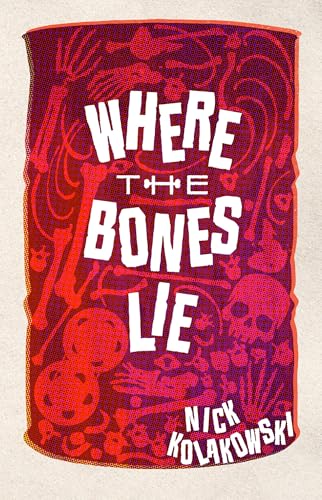
Just in: 2026 Shamus Awards, presented by the Private Eye Writers of America: Best First P.I. Novel: Where the Bones Lie, by Nick Kolakowski. – Congratulations!
** **
Nick Kolakowski is the author of several crime novels, including “Where the Bones Lie”, “Payback is Forever”, „Maxine Unleashes Doomsday“ and „Boise Longpig Hunting Club“ as well as the Love & Bullets trilogy of novellas. His work has been nominated for the Anthony and Derringer awards, and his short story “Scorpions” appeared in The Best Mystery and Suspense 2024. His short fiction has appeared in numerous anthologies and magazines, including Mystery Weekly, Shotgun Honey, Rock and a Hard Place Press, and more.
Out: RIGHTEOUS TRASH, the third book in what is called the Boise Noir Trilogy. Rock and a Hard Place Press did a masterful job on the cover (as they did with the reissued editions of the first two books in the trilogy, BOISE LONGPIG HUNTING CLUB and RATTLESNAKE RODEO).
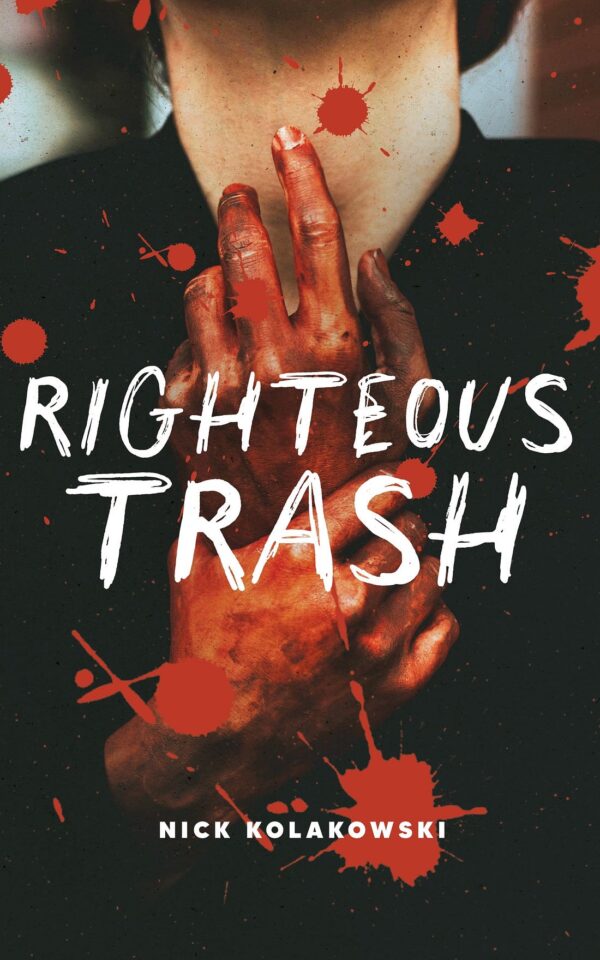
RIGHTEOUS TRASH follows Jake, an Iraq War veteran and former bounty hunter, and his gun-running sister Frankie as they try to dig themselves out of a big financial hole the only way they know how—by doing something incredibly insane and possibly deadly. »This time around, the action isn’t restricted to Idaho; there’s also a sequence set in New Orleans that’s a.) based on a real-life incident, if you can believe it, and b.) one of the funnier things I’ve written. The book’s centerpiece is also the craziest robbery I could think of—I had a lot of fun orchestrating that bit of chaos.«
His „Payback is Forever“ (Shotgun Honey 2022) is inspired clearly by the novels of Richard Stark. Our review here (in German). – See also his Hell of a Mess. A Love & Bullets Hookup.
Nick Kolakowski, geboren 1980, aufgewachsen in Washington. D.C., hat Geschichte in Chicago studiert. Er schreibt Romane, Kurzgeschichten, Lyrik und Essays, viele davon über Crime Fiction und verwandte Themen. Seine Texte erscheinen u. a. in der Washington Post, in Shotgun Honey, North American Review, The Evergreen Review, Rust & Months. Kolakowski lebt in New York City. Eine Besprechung des von Parker inspirierten „Payback is Forever“ in unseren Bloody Chops.

Bei Suhrkamp auf Deutsch: Love & Bullets.
His essays with us.
His website nickkolakowski.com
His column „Smoking Gun“ with us:
‘Salem’s Lot’ and the Horror of a Stephen King Adaptation
(27) „Rebel Ridge“: Calmly Burn the Whole Thing Down
‘Monsieur Spade’ and the Faustian Bargain
John Woo is Remaking ‘The Killer.’ But Why?
The Newest ‘Ripley’ Series is Stunning and Flawed
‘Sugar’: Not the Neo-Noir Revival We Need
(3) Moral Redemption in Noir: Is It Possible?
(4) What Makes Jack Reacher Tick?
(5) ‘True Detective: Night Country’ Tries to Make the Familiar into Something New
(6) Is David Fincher’s ‘The Killer’ a Comedy?
(7) Rewatching ‘Drive’: Gosling as Noir’s Apex Predator
(8) Elmore Leonard – City Primeval
(9) Cormac McCarthy Used Crime Fiction’s Tropes to Make Masterpieces
(10) Parker: Donald Westlake’s One Amazing Trick
(11) Cosby, Winslow, Pruitt: Three Heavy-Hitting Thillers for Summer
(12) Weed-Based Crime Thrillers are Going Up in Smoke
(13) ‘The Last of Us’: Crime in the Post-Apocalypse
(14) What Made “Glass Onion” and “Knives Out” So Popular?
(15) Jordan Harper’s One-Two Punch of Crime Fiction Deserves a Wide Audience
(16) ‘True Detective’ Season 2: Was It Better Than We All Thought?
(17) From ‘Touch of Evil’ to ‘True Detective,’ Long Shots are Crime Films’ Secret Weapon
(18) Michael Mann, again: What Michael Mann Teaches Us About Enduring Crime Fiction
(19) „Heat 2“ – How Do You Craft a Sequel to a Masterpiece?
(20) 4 Ways Tarantino’s “Once Upon a Time in Hollywood” Novel Stands Out From the Film.
(21) On „Heat“: Manhunter Takes Down Thief: How Michael Mann’s Early Career Led to ‘Heat’
(22) The Most Honest Nihilism – on „The Way of the Gun“
(23) No, Time to Die – The latest James Bond movie digs into the fatalism at the iconic spy’s core.
(24) Cormac McCarthy’s Overlooked Masterpiece? – „The Councelor“
(25) „Nightmare Alley“ – How Guillermo del Toro’s Film Alters a Masterpiece Noir Novel
(26) David Cronenberg – The Carnal Crime of “A History of Violence” and “Eastern Promises”
(27) With Parker, Donald E. Westlake Pulled Off Crime Fiction’s Most Spectacular Magic Trick
(28) Guy Ritchie’s Return to Crime Films is Worth Watching
(29) Alex Garland’s ‘Civil War’: Hint of Things to Come?
(30) David Lynch and the Beautiful Weirdness
(31) ‘Where the Bones Lie’ and the Engine of California Noir
(32) “Den of Thieves 2”: Stealing from the Best
(33) White Lotus and the Gentle Art of Hating Your Protagonists
(34) Neal Stephenson
(35) Where is Storytelling Going?
(36) ‚She Rides Shotgun‘ and the Making of Legends
(37) Jack Bauer, ‘24’ and the Great Memory-Hole
(38) How “Play Dirty” Did Richard Stark’s Parker Dirty
(39) ‘The Lowdown,’ Jim Thompson and the Ghosts of Noir
(40) “The Rip”: An Atypical Director Delivers a Typical Crime Thriller
(41) ‚Cape Fear‘ and Pop Cultural Eternal Return
(42) 3 x »Man on Fire«
(43) ‚The Black Dahlia‘ and Our Responsibility to the Past
(44) Jordan Harper’s New Novel Really Is “A Violent Masterpiece”
(45) Less is More When It Comes to Villains
(46) ‘Neuromancer’ and the Old New Cyberpunk
(47) A New Age of Kitsch?