A New Age of Kitsch?
Every time I see another example of AI slop—a LinkedIn post expressing Hallmark sentiments about Q3 sales, a bright pink unicorn cartoon prancing across my social media—I inevitably think about Milan Kundera’s definition of kitsch from “The Unbearable Lightness of Being” (as one does):
“Kitsch is the absolute denial of shit, in both the literal and figurative sense of the word; kitsch excludes everything from its purview which is essentially unacceptable in human existence.”
Sometimes I suspect we’re entering a new age of kitsch, in the sense of everyone relying on their AI tools to produce unstoppable amounts of shiny shit, with an eye toward crowding out the messy and unpleasant. Lonely souls are already using AI chatbots to create fake best friends; they’re tailoring their social feeds to give them only what they want to see, when they want to see it; the gyre is tightening, not widening.
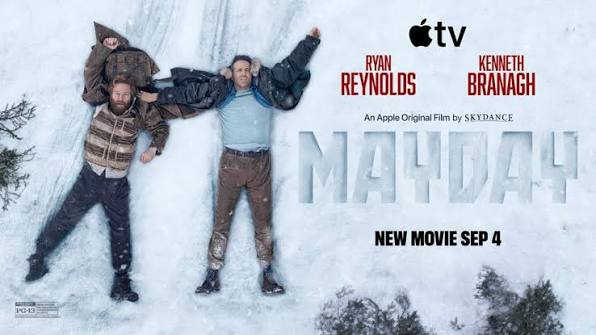
Anyway, I was thinking about Kundera and kitsch the other night, when I had an unexpected patch of time and an iPad, and no urge to read. I also discovered my iPad didn’t have my Netflix or HBO apps downloaded, forcing me into the emptier but nonetheless fertile valleys of Apple TV+. And there I discovered “Mayday,” a movie set in 1980s Russia, in which Kenneth Branagh plays a former KGB agent—and big fan of American culture—trying to save a U.S. military pilot (Ryan Reynolds).
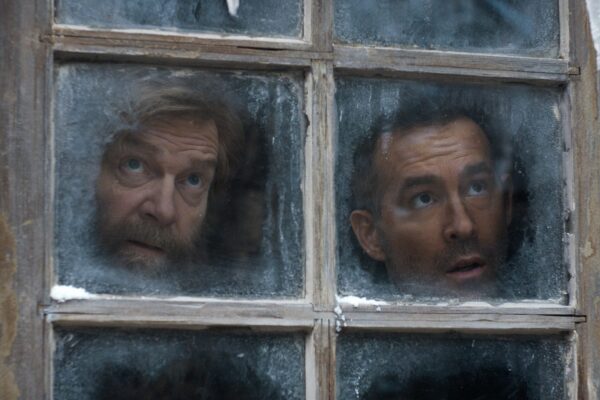

Branagh has a particular affinity for Russian accents, as demonstrated by his turns as the villain in Christopher Nolan’s criminally underrated “Tenet” and that one Jack Ryan film almost nobody remembers. He’s not the issue here; nor is the action, which is crunchy-smooth in the manner of pretty much every shoot ‘em up released since John Wick.
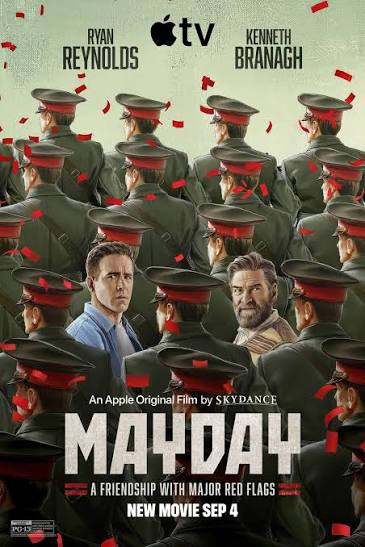
No, as I watched Branagh and Reynolds dutifully carry out the usual action-comedy beats, quipping while plowing through hordes of Russians, I kept thinking to myself: How would Kundera react to this? Or, Lord help us, someone like Solzhenitsyn? In the 70s and 80s, many of those dissident writers thought the Soviet system, despite its creakiness, would last forever—I imagine they’d be uneasily amused at the sight of a British actor with a hammy Russian accent, kicking a little combat jig atop a pile of cartoonish Soviet functionaries, in a sleek movie produced by an American company best known for selling phones. You couldn’t think of a better victory lap for capitalist culture, in some ways; if you hear a dim buzzing, that’s Marx spinning at 200 rpm in his tomb.
But there’s something disquieting about how the film aggressively chucks aside the Cold War’s tortured history in favor of punches ‘n laffs. Not every piece of entertainment dealing with Europe during what we might call the Recent Unpleasantness needs to be the emotional equivalent of Kuznetsov’s “Babi Yar” (a book well worth reading in light of the Ukrainian War, especially), but without even a brief acknowledgment of the very real pain and misery, the narrative belongs in an alternative universe—one of total kitsch. Which is fine for a two-star action movie, but there’s a little too much denial and kitsch—in the Kundera sense of the word—for easy breathing these days.
** **
Nick Kolakowski is the author of several crime novels, including “Where the Bones Lie”, “Payback is Forever”, „Maxine Unleashes Doomsday“ and „Boise Longpig Hunting Club“ as well as the Love & Bullets trilogy of novellas. His work has been nominated for the Anthony and Derringer awards, and his short story “Scorpions” appeared in The Best Mystery and Suspense 2024. His short fiction has appeared in numerous anthologies and magazines, including Mystery Weekly, Shotgun Honey, Rock and a Hard Place Press, and more.
Out: RIGHTEOUS TRASH, the third book in what is called the Boise Noir Trilogy. Rock and a Hard Place Press did a masterful job on the cover (as they did with the reissued editions of the first two books in the trilogy, BOISE LONGPIG HUNTING CLUB and RATTLESNAKE RODEO).
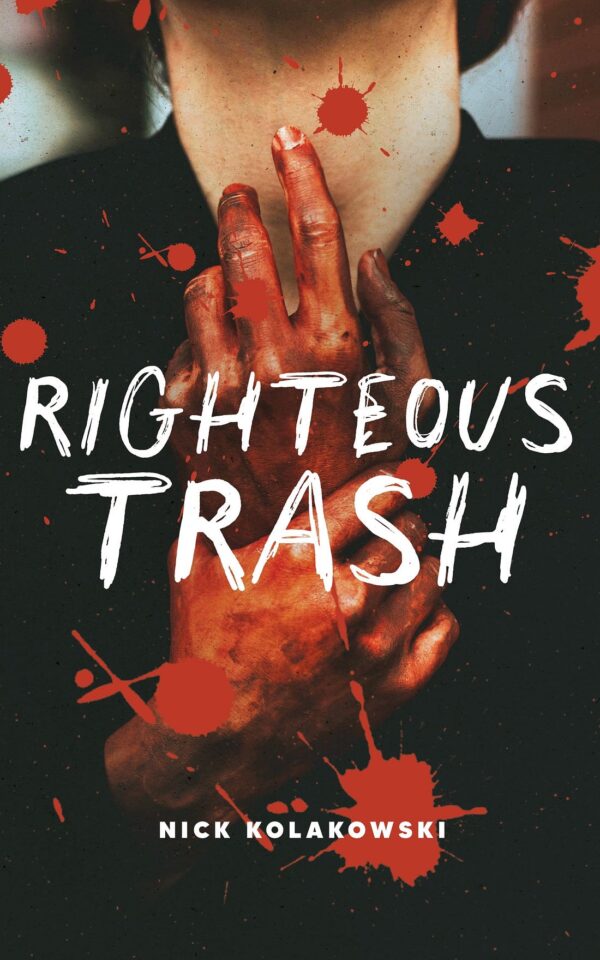
RIGHTEOUS TRASH follows Jake, an Iraq War veteran and former bounty hunter, and his gun-running sister Frankie as they try to dig themselves out of a big financial hole the only way they know how—by doing something incredibly insane and possibly deadly. »This time around, the action isn’t restricted to Idaho; there’s also a sequence set in New Orleans that’s a.) based on a real-life incident, if you can believe it, and b.) one of the funnier things I’ve written. The book’s centerpiece is also the craziest robbery I could think of—I had a lot of fun orchestrating that bit of chaos.«
His „Payback is Forever“ (Shotgun Honey 2022) is inspired clearly by the novels of Richard Stark. Our review here (in German). – See also his Hell of a Mess. A Love & Bullets Hookup.
Nick Kolakowski, geboren 1980, aufgewachsen in Washington. D.C., hat Geschichte in Chicago studiert. Er schreibt Romane, Kurzgeschichten, Lyrik und Essays, viele davon über Crime Fiction und verwandte Themen. Seine Texte erscheinen u. a. in der Washington Post, in Shotgun Honey, North American Review, The Evergreen Review, Rust & Months. Kolakowski lebt in New York City. Eine Besprechung des von Parker inspirierten „Payback is Forever“ in unseren Bloody Chops.

Bei Suhrkamp auf Deutsch: Love & Bullets.
His essays with us.
His website nickkolakowski.com
His column „Smoking Gun“ with us:
‘Salem’s Lot’ and the Horror of a Stephen King Adaptation
(27) „Rebel Ridge“: Calmly Burn the Whole Thing Down
‘Monsieur Spade’ and the Faustian Bargain
John Woo is Remaking ‘The Killer.’ But Why?
The Newest ‘Ripley’ Series is Stunning and Flawed
‘Sugar’: Not the Neo-Noir Revival We Need
(3) Moral Redemption in Noir: Is It Possible?
(4) What Makes Jack Reacher Tick?
(5) ‘True Detective: Night Country’ Tries to Make the Familiar into Something New
(6) Is David Fincher’s ‘The Killer’ a Comedy?
(7) Rewatching ‘Drive’: Gosling as Noir’s Apex Predator
(8) Elmore Leonard – City Primeval
(9) Cormac McCarthy Used Crime Fiction’s Tropes to Make Masterpieces
(10) Parker: Donald Westlake’s One Amazing Trick
(11) Cosby, Winslow, Pruitt: Three Heavy-Hitting Thillers for Summer
(12) Weed-Based Crime Thrillers are Going Up in Smoke
(13) ‘The Last of Us’: Crime in the Post-Apocalypse
(14) What Made “Glass Onion” and “Knives Out” So Popular?
(15) Jordan Harper’s One-Two Punch of Crime Fiction Deserves a Wide Audience
(16) ‘True Detective’ Season 2: Was It Better Than We All Thought?
(17) From ‘Touch of Evil’ to ‘True Detective,’ Long Shots are Crime Films’ Secret Weapon
(18) Michael Mann, again: What Michael Mann Teaches Us About Enduring Crime Fiction
(19) „Heat 2“ – How Do You Craft a Sequel to a Masterpiece?
(20) 4 Ways Tarantino’s “Once Upon a Time in Hollywood” Novel Stands Out From the Film.
(21) On „Heat“: Manhunter Takes Down Thief: How Michael Mann’s Early Career Led to ‘Heat’
(22) The Most Honest Nihilism – on „The Way of the Gun“
(23) No, Time to Die – The latest James Bond movie digs into the fatalism at the iconic spy’s core.
(24) Cormac McCarthy’s Overlooked Masterpiece? – „The Councelor“
(25) „Nightmare Alley“ – How Guillermo del Toro’s Film Alters a Masterpiece Noir Novel
(26) David Cronenberg – The Carnal Crime of “A History of Violence” and “Eastern Promises”
(27) With Parker, Donald E. Westlake Pulled Off Crime Fiction’s Most Spectacular Magic Trick
(28) Guy Ritchie’s Return to Crime Films is Worth Watching
(29) Alex Garland’s ‘Civil War’: Hint of Things to Come?
(30) David Lynch and the Beautiful Weirdness
(31) ‘Where the Bones Lie’ and the Engine of California Noir
(32) “Den of Thieves 2”: Stealing from the Best
(33) White Lotus and the Gentle Art of Hating Your Protagonists
(34) Neal Stephenson
(35) Where is Storytelling Going?
(36) ‚She Rides Shotgun‘ and the Making of Legends
(37) Jack Bauer, ‘24’ and the Great Memory-Hole
(38) How “Play Dirty” Did Richard Stark’s Parker Dirty
(39) ‘The Lowdown,’ Jim Thompson and the Ghosts of Noir
(40) “The Rip”: An Atypical Director Delivers a Typical Crime Thriller
(41) ‚Cape Fear‘ and Pop Cultural Eternal Return
(42) 3 x »Man on Fire«
(43) ‚The Black Dahlia‘ and Our Responsibility to the Past
(44) Jordan Harper’s New Novel Really Is “A Violent Masterpiece”
(45) Less is More When It Comes to Villains
(46) ‘Neuromancer’ and the Old New Cyberpunk