

White Lotus and the Gentle Art of Hating Your Protagonists
I come here not to praise the most recent season of “White Lotus,” nor to bury it, but to dig a moment into its characters—specifically, how those characters violate one of the more facile “rules” of screenwriting that have always driven me slightly insane.
If you’ve ever sat through any kind of Screenwriting 101 course, you know that instructors often insist you make a character sympathetic, or at least empathetic. Nobody will buy your script if they don’t like your protagonist, they’ll say. People won’t want to watch it. (You also find this edict delivered amidst fiction-writing courses, albeit more rarely.)

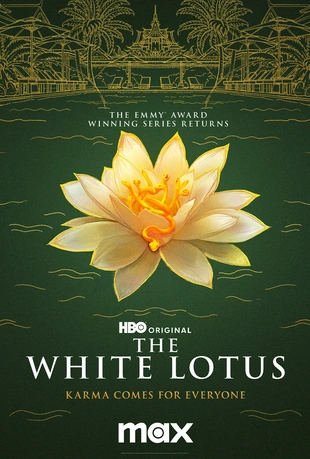


“White Lotus” takes that advice, grips it in a sweaty double-suplex, and smashes it neck-first into the mat. Throughout all three seasons, virtually no characters are sympathetic; in fact, the majority are hilariously reprehensible, a gaggle of ultra-rich hotel guests who never realize how terminally disconnected they sound as they opine about their workout routines or surface-sheen spirituality. The hospitality staff in the background often come off a little better, but many of them are just as venal in their own ways.
Mike White, the showrunner and writer, gets away with it because “White Lotus” is also funny as hell, at least if your idea of humor is watching miserable people implode gradually, then suddenly. The third season hints at some kind of higher power at work, a state of grace beyond petty human concerns—but even that’s vaporized by the characters’ self-absorption. I can’t get into it, I’ve heard more than one friend say. I just don’t like anyone onscreen. But that’s exactly the point.
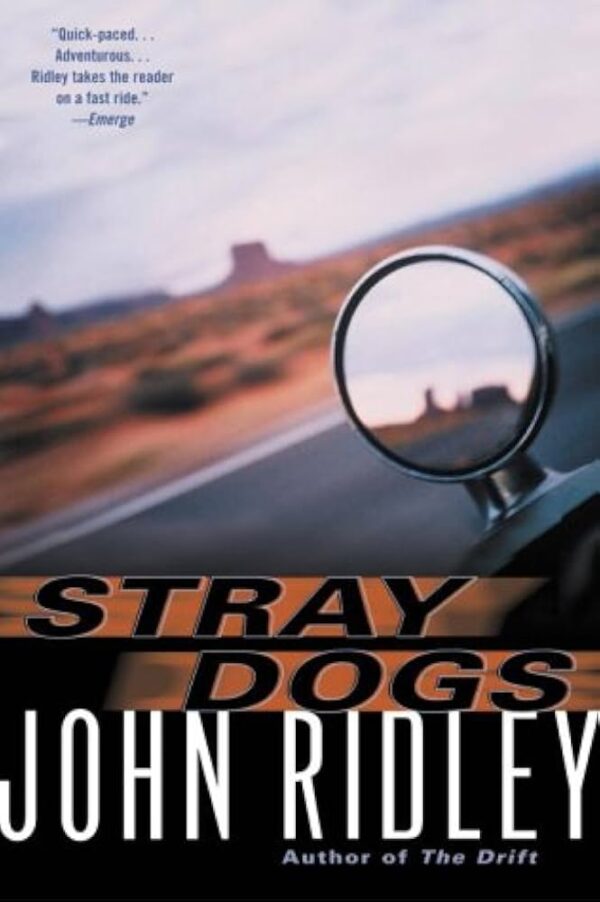
“White Lotus” reminds me of a noir novel that heavily influenced my own writing: John Ridley’s “Stray Dogs,” which I first discovered in a used bookstore when I was a teenager. That novel follows a totally amoral cheat named John Stewart as he’s stranded in a small Arizona town. With his car broken and a bunch of mobsters in hot pursuit, he does literally everything—down to murder and stealing from a blind man—to claw his way out of his situation.
There’s nothing likeable about John, a miserable bastard who would screw over his own grandmother for a buck-ninety. He’s not redeemed by the end. No, the book’s pleasure is in how totally he’s destroyed by the last page. Ridley encourages you to positively delight as this cheating backstabber systematically loses his money, car, fingers, dignity, and so much else. (The book was later adapted into the excretable Oliver Stone movie “U-Turn,” with Sean Penn as John—it’s not nearly as hilarious as the book, despite keeping much of the dialogue, mostly because Stone can’t get out of his own way as a filmmaker.)
Writers are always looking for ways to make their characters more sympathetic, but maybe they should consider the sheer entertainment value of schadenfreude. If anything, “White Lotus” pulls its punches. There’s opportunity out there for someone to write a truly biting, vicious satire of bad souls in a tailspin.
** **

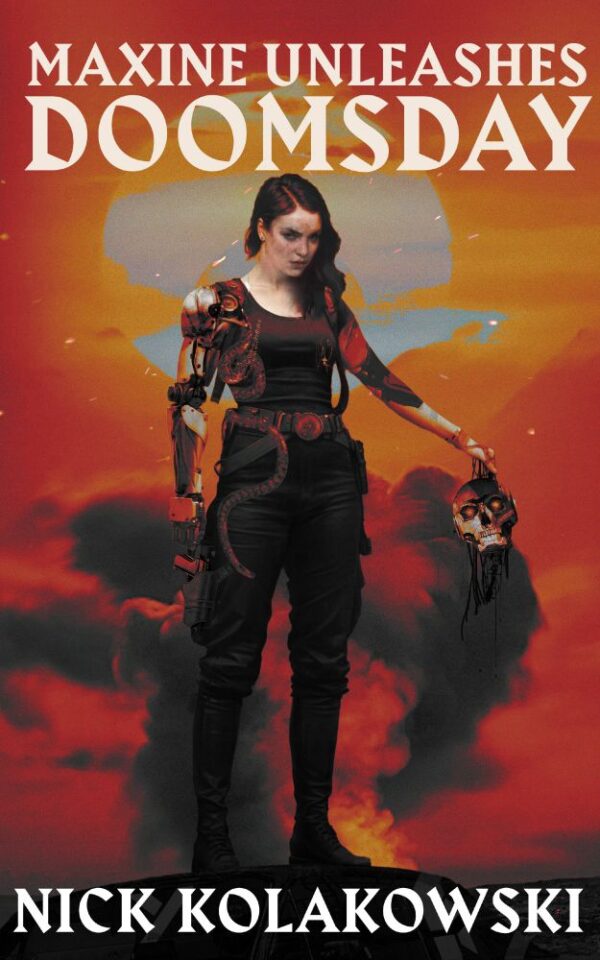
Nick Kolakowski is the author of several crime novels, including “Where the Bones Lie”, “Payback is Forever”, „Maxine Unleashes Doomsday“ and „Boise Longpig Hunting Club“ as well as the Love & Bullets trilogy of novellas. His work has been nominated for the Anthony and Derringer awards, and his short story “Scorpions” appeared in The Best Mystery and Suspense 2024. His short fiction has appeared in numerous anthologies and magazines, including Mystery Weekly, Shotgun Honey, Rock and a Hard Place Press, and more.
His „Payback is Forever“ (Shotgun Honey 2022) is inspired clearly by the novels of Richard Stark. Our review here (in German). – See also his Hell of a Mess. A Love & Bullets Hookup.
Nick Kolakowski, geboren 1980, aufgewachsen in Washington. D.C., hat Geschichte in Chicago studiert. Er schreibt Romane, Kurzgeschichten, Lyrik und Essays, viele davon über Crime Fiction und verwandte Themen. Seine Texte erscheinen u. a. in der Washington Post, in Shotgun Honey, North American Review, The Evergreen Review, Rust & Months. Kolakowski lebt in New York City. Eine Besprechung des von Parker inspirierten „Payback is Forever“ in unseren Bloody Chops.

Bei Suhrkamp auf Deutsch: Love & Bullets.
His essays with us.
His website nickkolakowski.com
His column „Smoking Gun“ with us:
‘Salem’s Lot’ and the Horror of a Stephen King Adaptation
„Rebel Ridge“: Calmly Burn the Whole Thing Down
‘Monsieur Spade’ and the Faustian Bargain
John Woo is Remaking ‘The Killer.’ But Why?
The Newest ‘Ripley’ Series is Stunning and Flawed
‘Sugar’: Not the Neo-Noir Revival We Need
Moral Redemption in Noir: Is It Possible?
What Makes Jack Reacher Tick?
‘True Detective: Night Country’ Tries to Make the Familiar into Something New
Is David Fincher’s ‘The Killer’ a Comedy?
Rewatching ‘Drive’: Gosling as Noir’s Apex Predator
Elmore Leonard – City Primeval
Cormac McCarthy Used Crime Fiction’s Tropes to Make Masterpieces
Parker: Donald Westlake’s One Amazing Trick
Cosby, Winslow, Pruitt: Three Heavy-Hitting Thillers for Summer
Weed-Based Crime Thrillers are Going Up in Smoke
‘The Last of Us’: Crime in the Post-Apocalypse
What Made “Glass Onion” and “Knives Out” So Popular?
Jordan Harper’s One-Two Punch of Crime Fiction Deserves a Wide Audience
‘True Detective’ Season 2: Was It Better Than We All Thought?
From ‘Touch of Evil’ to ‘True Detective,’ Long Shots are Crime Films’ Secret Weapon
Michael Mann, again: What Michael Mann Teaches Us About Enduring Crime Fiction
„Heat 2“ – How Do You Craft a Sequel to a Masterpiece?
4 Ways Tarantino’s “Once Upon a Time in Hollywood” Novel Stands Out From the Film.
On „Heat“: Manhunter Takes Down Thief: How Michael Mann’s Early Career Led to ‘Heat’
The Most Honest Nihilism – on „The Way of the Gun“
No, Time to Die – The latest James Bond movie digs into the fatalism at the iconic spy’s core.
Cormac McCarthy’s Overlooked Masterpiece? – „The Councelor“
„Nightmare Alley“ – How Guillermo del Toro’s Film Alters a Masterpiece Noir Novel
David Cronenberg – The Carnal Crime of “A History of Violence” and “Eastern Promises”
With Parker, Donald E. Westlake Pulled Off Crime Fiction’s Most Spectacular Magic Trick
Guy Ritchie’s Return to Crime Films is Worth Watching
(29) Alex Garland’s ‘Civil War’: Hint of Things to Come?
(30) David Lynch and the Beautiful Weirdness
(31) ‘Where the Bones Lie’ and the Engine of California Noir
(32) “Den of Thieves 2”: Stealing from the Best