“Man on Fire” is Next in Pop Culture’s Recycling Queue
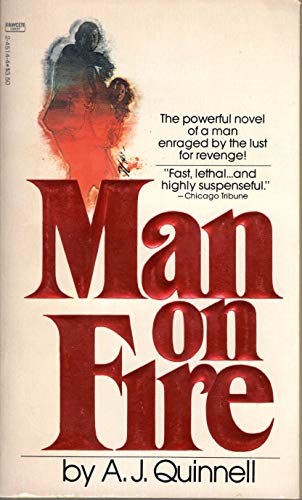
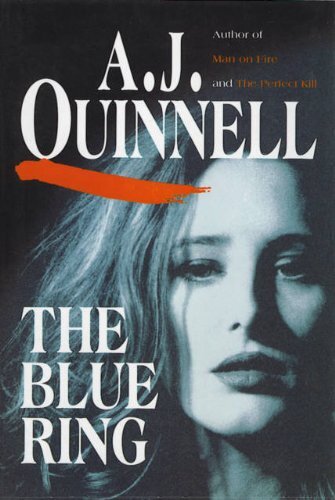
I first discovered A.J. Quinnell’s novel “Man on Fire” (1980) in the bathroom of Snowdonia, a bar in Astoria. Some wit had lined the shelves beside the sink with tattered, yellowed paperbacks from a bygone era, and I presumed customers were meant to help themselves.
Like Mario Puzo’s “The Godfather” and Roderick Thorp’s “Nothing Lasts Forever” (adapted into “Die Hard”), “Man on Fire” is an example of a pulpy, largely forgettable novel that was eventually adapted into a memorable film. The narrative follows Marcus Creasy, a former mercenary turned full-time alcoholic who takes a job as a bodyguard for the young daughter of a textiles manufacturer in Milan. The girl is kidnapped and killed by the local mafia; Creasy then murders his way through all the gangsters responsible.
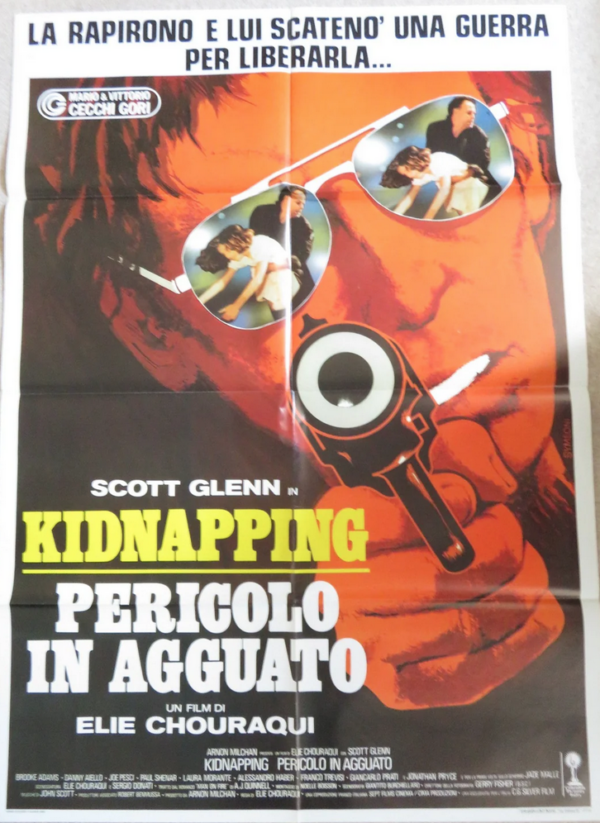
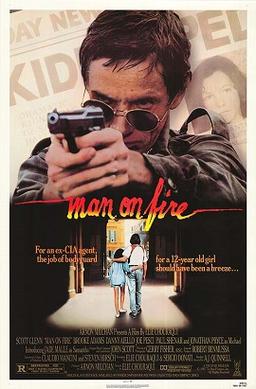
It’s not prose or a plot for the ages, and it yielded a pretty dull action movie with Scott Glenn in 1987., directed by Elie Chouraqui. Thirteen years after *that,* however, Tony Scott directed another version of the film, with Denzel Washington as Creasy and the setting changed from Italy to Mexico City, and that is worth seeing.
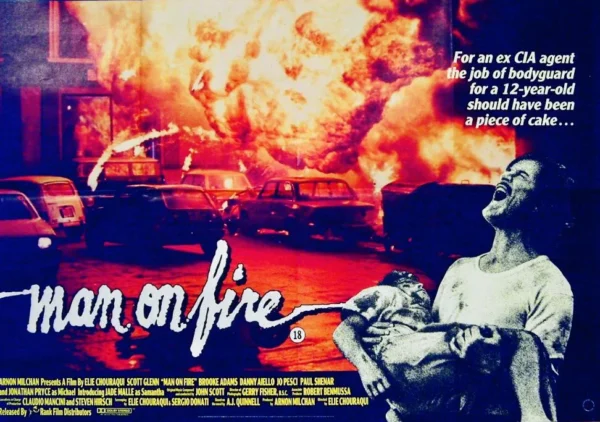
1987 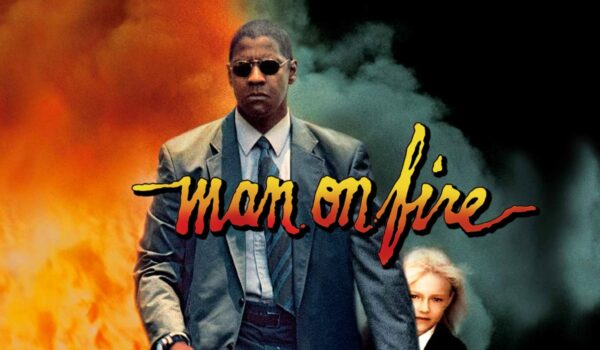
2004 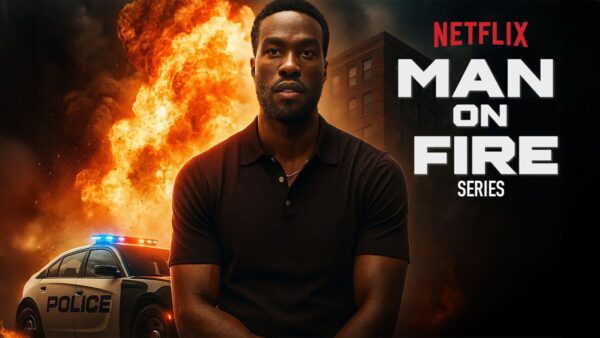
2026
“Man on Fire” is the epitome of Scott’s late period, when he had enough cachet in Hollywood to go stylistically berserk with no repercussions. The ultra-sleek filmmaking of “Top Gun,” “Crimson Tide,” and his other 80s and 90s hits gave way to jittery chaos: extreme-contrast shots, often shaky and hand-held; jarring cuts and freeze-frames; characters’ lines displayed on screen like living cartoon bubbles; odd green and orange filters.
This technique didn’t always work. When Scott made “Domino” (2005) one of my favorite “bad” movies, he kept the proverbial accelerator slammed to the floor for the entire running time, resulting in the cerebral equivalent of guzzling a 2-liter Mountain Dew chased by a pack of unfiltered cigarettes. When Tom Waits as a crazed preacher is the calmest thing in your movie, you might be alienating most of your audience.
But “Man on Fire,” released the previous year, achieved a finer balance. In that film, whenever Christopher Walken, cast somewhat against type as the quiet voice of reason, engages Washington’s Creasy in discussion about their misspent lives, the camera settles down and behaves. Washington often sits in silence for a few moments, gathering himself before the next pyrotechnic performance. If you’re going to subject an audience to two-plus hours of visual insanity, you need to pause for breath every 20 minutes or so.
The movie also works because Washington, as one of the finest actors of his generation, was able to channel a rage so blue-flame pure, you completely understand—maybe even empathize—as he does terrible things. The script gives him glib finishing lines, typical action-movie bullshit, but he delivers them with a frightening surety that just makes you glad someone like that isn’t after you.
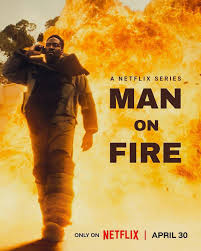
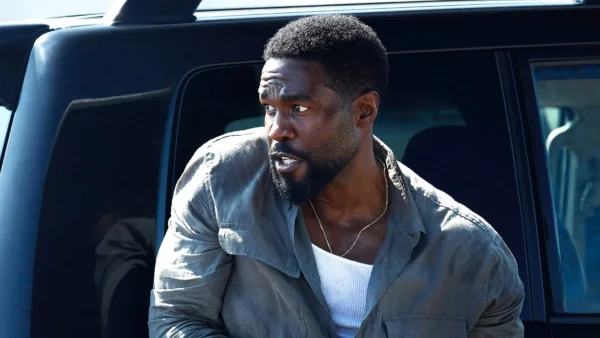
Yahya Abdul-Mateen 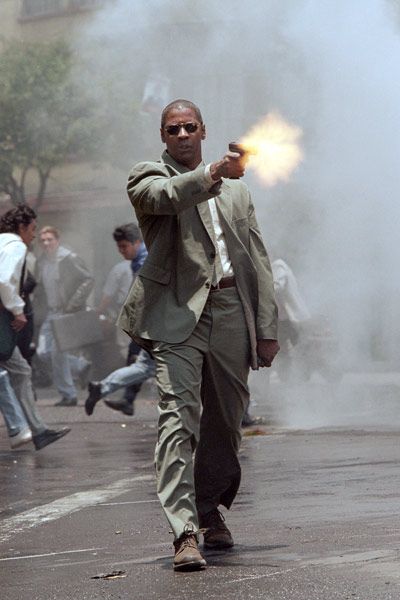
Denzel Washington 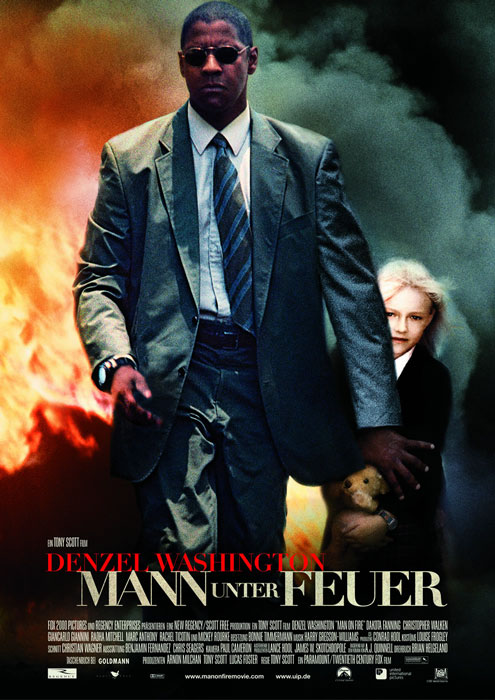
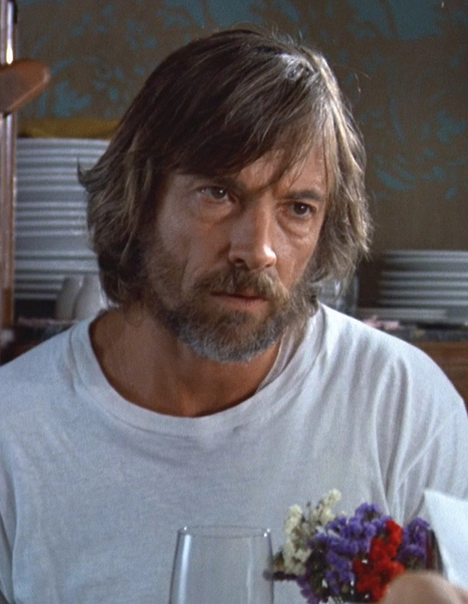
Scott Glenn
The ending is also a bit of a dud, and you can’t fault Scott for that. The original finale, which you can find on YouTube, is much better, but you can see why they reshot it—it echoes aspects of the so-called War on Terror, then at its height, that Americans would sooner overlook. But overall, the film is a memorable piece of work.
In any case, for our sins, Netflix is gifting us a streaming-series remake, with Yahya Abdul-Mateen in the Creasy role, and the locale updated to Brazil. I have zero doubt that Abdul-Mateen can deliver, but like Apple TV’s upcoming remake of “Cape Fear” with Javier Bardem, you have to ask yourself: why? Or as someone put it online: “Why is Netflix giving us gas-station burgers when Denzel already delivered filet mignon?”
Why indeed. The answer’s obvious: because remaking existing IP is a safe bet. Netflix’s algorithm probably spat out that people who watched Scott’s “Man on Fire” were 50 percent more likely to watch other action movies on the service, or something like that. Based on the trailers, it doesn’t seem like the new series’ directors are trying to rip off emulate Scott’s flair, which I guess is a small blessing.
In the meantime, in a priceless example of how our pop culture has achieved a twisted type of ouroboros, Washington himself essentially remade A.J. Quinnell’s original novel with “The Equalizer 3” (2023), in which he plays a shadowy ex-operative who takes refuge in a bucolic Italian village, gets spiritually adopted by the nice townsfolk, and then horrifically murders a whole lot of stereotypical mafia goons. (Or maybe it’s a spiritual sequel to Scott’s “Man on Fire,” considering the cast, although Scott himself would’ve thrown a chair through a window at the thought.) The epic of righteous revenge is an archetype that we can’t seem to ever escape, just recycle into new forms that always contain some of the old.
** **

Nick Kolakowski is the author of several crime novels, including “Where the Bones Lie”, “Payback is Forever”, „Maxine Unleashes Doomsday“ and „Boise Longpig Hunting Club“ as well as the Love & Bullets trilogy of novellas. His work has been nominated for the Anthony and Derringer awards, and his short story “Scorpions” appeared in The Best Mystery and Suspense 2024. His short fiction has appeared in numerous anthologies and magazines, including Mystery Weekly, Shotgun Honey, Rock and a Hard Place Press, and more.
Just out: RIGHTEOUS TRASH, the third book in what is called the Boise Noir Trilogy. Rock and a Hard Place Press did a masterful job on the cover (as they did with the reissued editions of the first two books in the trilogy, BOISE LONGPIG HUNTING CLUB and RATTLESNAKE RODEO).
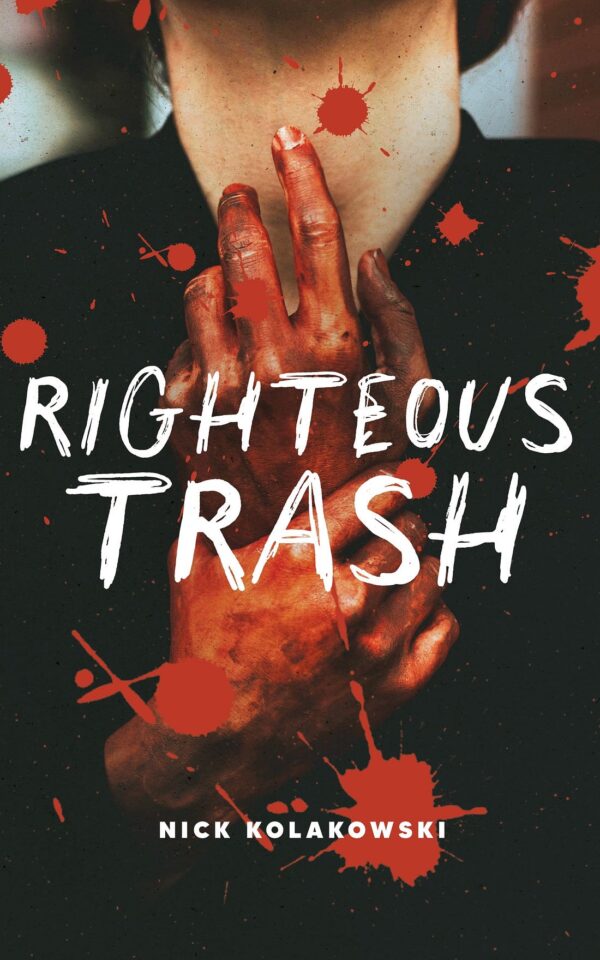
RIGHTEOUS TRASH follows Jake, an Iraq War veteran and former bounty hunter, and his gun-running sister Frankie as they try to dig themselves out of a big financial hole the only way they know how—by doing something incredibly insane and possibly deadly. »This time around, the action isn’t restricted to Idaho; there’s also a sequence set in New Orleans that’s a.) based on a real-life incident, if you can believe it, and b.) one of the funnier things I’ve written. The book’s centerpiece is also the craziest robbery I could think of—I had a lot of fun orchestrating that bit of chaos.«
His „Payback is Forever“ (Shotgun Honey 2022) is inspired clearly by the novels of Richard Stark. Our review here (in German). – See also his Hell of a Mess. A Love & Bullets Hookup.
Nick Kolakowski, geboren 1980, aufgewachsen in Washington. D.C., hat Geschichte in Chicago studiert. Er schreibt Romane, Kurzgeschichten, Lyrik und Essays, viele davon über Crime Fiction und verwandte Themen. Seine Texte erscheinen u. a. in der Washington Post, in Shotgun Honey, North American Review, The Evergreen Review, Rust & Months. Kolakowski lebt in New York City. Eine Besprechung des von Parker inspirierten „Payback is Forever“ in unseren Bloody Chops.

Bei Suhrkamp auf Deutsch: Love & Bullets.
His essays with us.
His website nickkolakowski.com
His column „Smoking Gun“ with us:
‘Salem’s Lot’ and the Horror of a Stephen King Adaptation
(27) „Rebel Ridge“: Calmly Burn the Whole Thing Down
‘Monsieur Spade’ and the Faustian Bargain
John Woo is Remaking ‘The Killer.’ But Why?
The Newest ‘Ripley’ Series is Stunning and Flawed
‘Sugar’: Not the Neo-Noir Revival We Need
(3) Moral Redemption in Noir: Is It Possible?
(4) What Makes Jack Reacher Tick?
(5) ‘True Detective: Night Country’ Tries to Make the Familiar into Something New
(6) Is David Fincher’s ‘The Killer’ a Comedy?
(7) Rewatching ‘Drive’: Gosling as Noir’s Apex Predator
(8) Elmore Leonard – City Primeval
(9) Cormac McCarthy Used Crime Fiction’s Tropes to Make Masterpieces
(10) Parker: Donald Westlake’s One Amazing Trick
(11) Cosby, Winslow, Pruitt: Three Heavy-Hitting Thillers for Summer
(12) Weed-Based Crime Thrillers are Going Up in Smoke
(13) ‘The Last of Us’: Crime in the Post-Apocalypse
(14) What Made “Glass Onion” and “Knives Out” So Popular?
(15) Jordan Harper’s One-Two Punch of Crime Fiction Deserves a Wide Audience
(16) ‘True Detective’ Season 2: Was It Better Than We All Thought?
(17) From ‘Touch of Evil’ to ‘True Detective,’ Long Shots are Crime Films’ Secret Weapon
(18) Michael Mann, again: What Michael Mann Teaches Us About Enduring Crime Fiction
(19) „Heat 2“ – How Do You Craft a Sequel to a Masterpiece?
(20) 4 Ways Tarantino’s “Once Upon a Time in Hollywood” Novel Stands Out From the Film.
(21) On „Heat“: Manhunter Takes Down Thief: How Michael Mann’s Early Career Led to ‘Heat’
(22) The Most Honest Nihilism – on „The Way of the Gun“
(23) No, Time to Die – The latest James Bond movie digs into the fatalism at the iconic spy’s core.
(24) Cormac McCarthy’s Overlooked Masterpiece? – „The Councelor“
(25) „Nightmare Alley“ – How Guillermo del Toro’s Film Alters a Masterpiece Noir Novel
(26) David Cronenberg – The Carnal Crime of “A History of Violence” and “Eastern Promises”
(27) With Parker, Donald E. Westlake Pulled Off Crime Fiction’s Most Spectacular Magic Trick
(28) Guy Ritchie’s Return to Crime Films is Worth Watching
(29) Alex Garland’s ‘Civil War’: Hint of Things to Come?
(30) David Lynch and the Beautiful Weirdness
(31) ‘Where the Bones Lie’ and the Engine of California Noir
(32) “Den of Thieves 2”: Stealing from the Best
(33) White Lotus and the Gentle Art of Hating Your Protagonists
(34) Neal Stephenson
(35) Where is Storytelling Going?
(36) ‚She Rides Shotgun‘ and the Making of Legends
(37) Jack Bauer, ‘24’ and the Great Memory-Hole
(38) How “Play Dirty” Did Richard Stark’s Parker Dirty
(39) ‘The Lowdown,’ Jim Thompson and the Ghosts of Noir
(40) “The Rip”: An Atypical Director Delivers a Typical Crime Thriller
(41) ‚Cape Fear‘ and Pop Cultural Eternal Return