David Whish-Wilson: Working from the micro to the macro scales
This year I finally reached for a book that’s been on my bookshelf for three decades – Vasily Grossman’s Life & Fate (Flamingo). The occasion was a rare holiday, and a rare opportunity to read for pleasure. I’d originally intended on taking the entire oeuvre of Joseph Roth on holiday with me, including his journalism, but there wasn’t room in my bag. Life & Fate didn’t disappoint – a deeply observed and wide-ranging catalogue of the absurdities of authoritarian thinking, and the responses of ordinary people, during a brief moment on the front lines of Stalingrad when the ordinary human virtues of kindness and loyalty were foregrounded (before being extinguished.)
The novel reminded me of the neo-humanist philosophy of Tzvetan Todorov, amid his examinations of human behaviour in extremis (in the lagers and gulags) where the only hope to be found is in the recognition that human goodness cannot be extinguished, no matter the context or pressure, among a special kind of person (those who’ve come to know themselves well enough to understand that capitulating to evil makes life not worth living.)
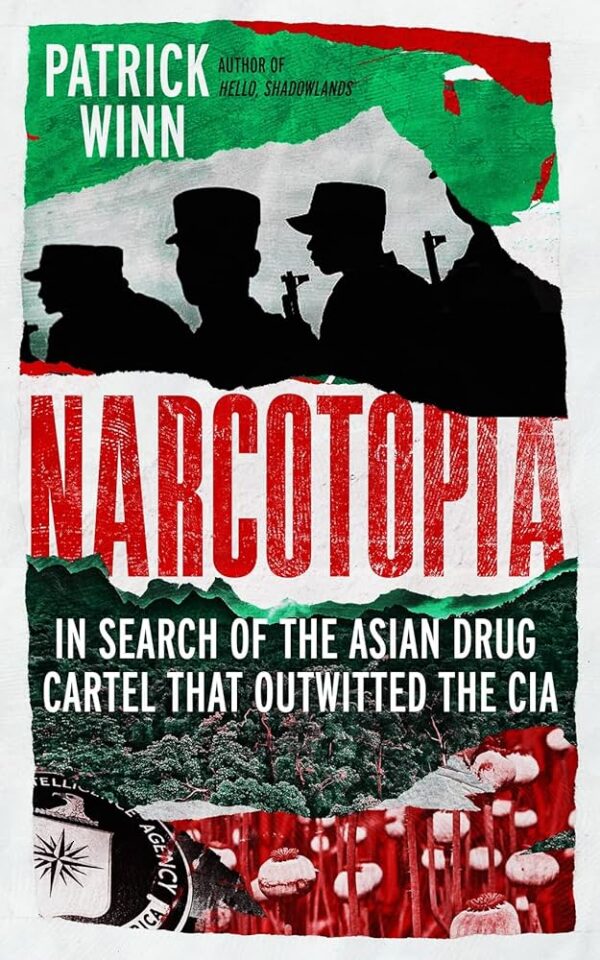
On this same holiday I also took, and enjoyed, Narcotopia by Patrick Winn (Icon), an intriguing and absurd history of the Wa people of Burma’s long history, aided and largely abetted by the CIA, of heroin production and distribution. Winn writes in a breezy style and the story is fascinating, coming first-hand from his experiences and interviews. Following this I re-read James Ellroy’s Dudley Smith trilogy – The Big Nowhere, L.A. Confidential and White Jazz (Arrow), finishing the holiday by diving into Alex Butterworth’s The World that Never Was: A True Story of Dreamers, Schemers, Anarchists and Secret Agents – an absorbing account of the schemes of various revolutionary characters and the dirty dealing of the police actors who disrupted their plans and plots.
Three ocean-themed non-fiction books I thought were terrific this year were James Bradley’s Deep Water: The world in the Ocean (Penguin), Paul Hardisty’s In Hot Water: Inside the Battle to Save the Great Barrier Reef (Affirm Press) and Helen Czerski’s The Blue Machine: How the Ocean works (WW Norton & Co), the former taking a kaleidoscopic view of the ocean as both an entity and a cultural construct, a perfect example of creative non-fiction’s power to both illuminate and energise, while Hardisty’s timely examination of the politics surrounding Australia’s Great Barrier Reef in a time of global warming is both a wake-up call and an incisive examination of the necessary science and the obfuscating forces wrestling over commitments to action. Czerski’s book on the other hand works as an elegy to the deep-time forces that govern the ocean, and therefore all of our lives, working from the micro to the macro scales and full of the kind of telling detail and anecdote that suggests broader meaning, and is another book I highly recommend.
Australian crime fiction continues booming and with my workload as an academic there just isn’t enough time to read all of the novels I want to read. Highlights for me this year include Dave Warner’s latest (IMO his best yet), When it Rains (Fremantle Press), Iain Ryan’s follow-up to The Strip (2023), The Dream (Ultimo Press), Chris Hammer’s The Valley as well as Alan Carter’s Prize Catch (Fremantle Press), a Tasmania-set crime novel that’s won plenty of fans.
I have one more week of holiday, and ahead of me lies the latest from one of my favourite Australian writers, Robbie Arnott’s, Dusk (Picador) as well as the latest from Hayley Scrivenor and Andrew Nette, a great Australian scholar of pulp forms and radical texts, with his Samm Deighan collaboration Revolution in 35mm: Political Violence and Resistance in Cinema from the Arthouse to the Grindhouse 1960-1990 (PM Press), which I’m looking forward to diving into.
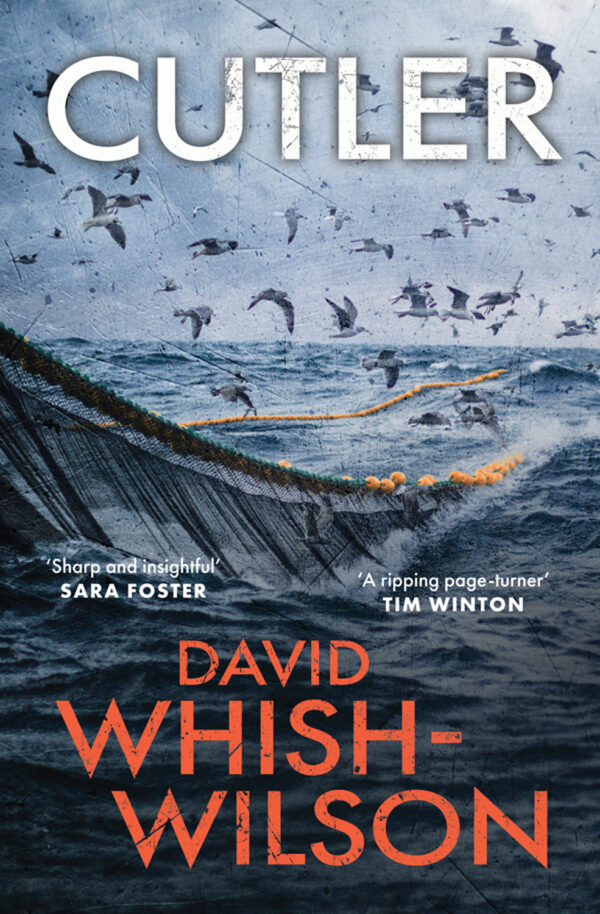
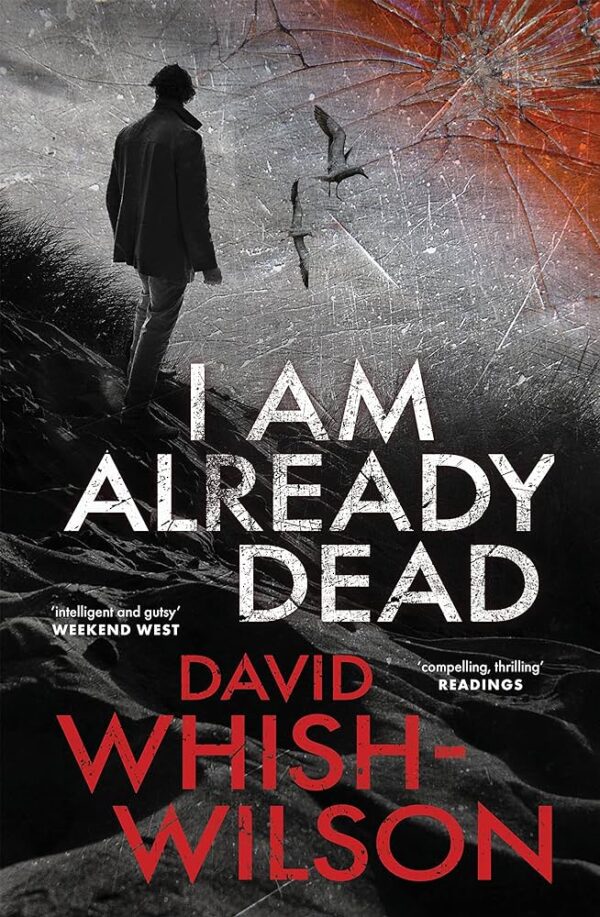
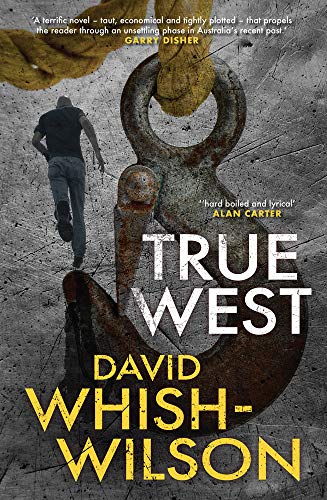
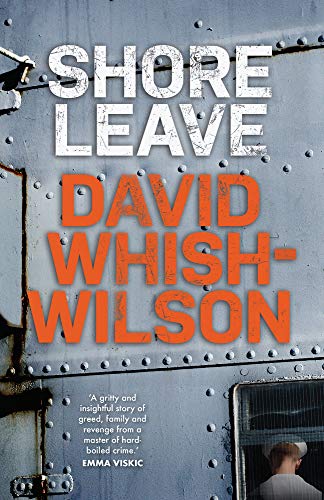
David Whish-Wilson lives in Fremantle/ Western Australia with his wife and three kids and is the author of Cutler (review with us very soon), I Am Already Dead, True West (CrimeMag review here), of The Cove (CrimeMag review here) and some other fine novels, two of them shortlisted for the Ned Kelly Award for crime fiction. His first three Frank Swann novels are translated in Germany, published by Suhrkamp. Book 4 is titled Shore Leave. His non-fiction book Perth (2014) was shortlisted for the WA Premier’s Book Awards.
Dave’s presence at CulturMag. His website.



**
Robert Wilson: Still living with the repercussions
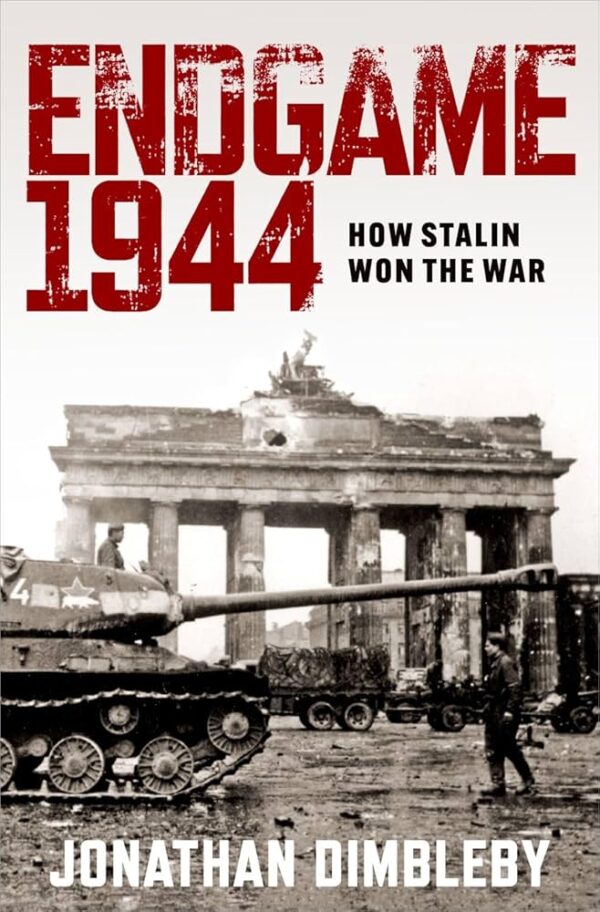
I have moved to a village ten miles from the Book Festival town of Hay-on-Wye and during the Winter Festival, set in a starlit tent in the grounds of the castle, I went to see Johnathan Dimbleby, historian, author and broadcaster who was talking about his new book ‘Endgame 1944. How Stalin Won the War.’
Everybody in the UK and certainly in the USA, Canada and Australia, whose troops made up most of the landing forces on D-Day, like to think that it was this final, brilliantly conceived and executed, offensive that defeated the Nazis and won the war in Europe. The reality is, as Dimbleby displays in the strapline of this book, that the D-Day landings couldn’t have even taken place (and, without extraordinary pressure from Stalin, might not have taken place at all) had it not been for the colossal Red Army offensive from the East whose name has escaped almost every English-speaking person in the world. Operation Overlord is practically part of our DNA, as is, the Battle of Britain and to a lesser extent Operation Market Garden that resulted in the capture of two crucial bridges at Arnhem, but Operation Bagration?
We are well-informed in the West of the importance and heroism of the handful of troops in Stalingrad who arrested the Nazi invasion of Russia at the River Volga and, literally, bogged them down in brutal street-to-street, hand-to-hand combat. This gave the Soviet industrial complex and multitudinous military the time to reorganise themselves into a fighting force that eventually encircled the 6th Army and visited the first major defeat on the hitherto triumphant Nazis. After that success in the winter of 1942/3, 2700 km from Berlin, and perhaps the biggest tank battle of all time at Kursk in the summer of 1943, things for us in the West get a little hazy.
By January 1944 the Red Army was stretched over a 3000km front, from Leningrad in the north to Kherson on the Black Sea, along which the Nazis would fight them, pretty much every inch of the 1500 km the Red Army still had to cover, before they could raise the flag over the Reichstag in Berlin. Yes, Operation Bagration, was without doubt the most monumental offensive of the Second World War and, without that major distraction to the battle-hardened, brilliantly organised Wehrmacht, D-Day would have been impossible.
In fact Churchill, still burdened by the disaster of the Dardanelles in 1915, was not at all keen on an amphibious assault on northern France and ducked Stalin every time he mentioned it through 1942 and 1943, citing the U-Boat domination over the North Atlantic convoys. He was all for a ground assault on Germany starting from Northern Italy and striking through the Balkans. This was not just because of his horror of beach landings, but also his suspicion of what a power-inflated Marshal Joseph Stalin, high on the hog, might have in mind for all those Eastern European countries currently in Nazi hands.
Not only that but political unity on the part of the US and Britain was not as we might have conceived it in our present (possibly wavering a little now) mental state of the treasured ‘special relationship’. US President Franklin D Roosevelt was not keen on imperialism and he saw Britain, and perhaps Churchill himself, as the embodiment of colonisation and anti-democratic ‘spheres of influence’ that he despised. Whereas Stalin, who in our minds, was known to be one of the Soviet Union’s most brutal dictators supported by his terrifying ‘enforcer’ Lavrentiy Beria, managed to charm FDR into believing that they were of the same mind. Stalin even showed Henry Wallace, FDR’s VP, the Kolyma gulags and managed to hoodwink him into believing that the labour there was voluntary. The result was that in the great conferences of Tehran and Yalta, rather than The Big Three, it was more like The Big Two plus Churchill who had enormous difficulty in trying to warn FDR of the post war implications of giving the Marshal free rein.
The Red Army, ably led by star Generals such as Zhukov, Bagramyan, Rokossovsky, Konev and Vatututin, who understood the climate and the terrain, were bolstered by US material such as outstanding trucks that could keep the advancing army supplied in all weathers and had seemingly endless reserves of young men, were unstoppable. Overseeing them was the Stavka, the Russian High Command, who not only planned the individual battles down to the last detail, but also conceived of giant hoaxes, maskirovska as it was known, where whole divisions of men and fake tanks would noisily take up positions to convince the Nazis that attacks were imminent only for the bewildered Germans to find themselves mysteriously pincered and encircled from another direction.
The very capable Nazi generals such as Manstein, Model, Guderian and Balck were not only bamboozled by maskirovska but were constantly frustrated by Hitler’s inability to accept that sometimes retreat and reorganisation were better than fighting to the last man. Hitler couldn’t believe that the history of Russian invasion failures would also apply to him. Having advanced through the summer of 1942 to the gates of Moscow and Stalingrad he’d stretched his supply lines beyond the limit. Winter, that not-so-secret Russian weapon of mass destruction, hit and his soldiers had to spend it out in the open. In their weakened state the Red Army drove the German armies back to cities, which Hitler would proclaim feste Plätze, fortified places that must be held at all costs, but which were constantly overtaken and besieged by rapid Russian advances. Undefended stretches of the German front needed to be filled but there was rarely the manpower and machinery available to do it.
The violence and brutality on both sides was breathtaking. The Russians were in a rage at the atrocities committed by the Nazis during their ruthless advance through the lands of the Slavic Untermenschen. Not to mention their commitment, in both victory and defeat, to wiping out all Jewish communities. The Red Army’s savage retaliation was encouraged by senior officers and it was surely one of the reasons why the Nazis fought so hard. The fear of being captured was a visceral dread. How the civilians coped with these marauding armies plundering their livestock, provisions, and clothing while laying waste to their homes and raping their women is also covered and might leave you in a state of despair at the nature of homo sapiens. There is, though, as we’ve seen in Vassily Grossman’s book ‘Life and Fate’ an inspiring mention of ‘kindness’ where a captured German officer is offered a piece of bread by a local woman for no other reason. All is not lost.
It’s fascinating to find ourselves 80 years on still living with the repercussions of Stalin’s revenge on Hitler’s intrusion. The number of times that the Marshal’s name has been invoked by Putin to justify his invasion of a Ukraine manned and led, as he purports, by neo-Nazi fascists hitched to the NATO expansion wagon, which Russia had been promised would never happen.
Are we humans consigned never to be able to learn anything from history?
Well-travelled Robert Wilson is the author of the Bruce Medway-, Charles Boxer- and Javier Falcon-novels. In 2003 his novel Tod in Lissabon (A Small Death in Lisbon) won the „Deutscher Krimipreis“. He has finished a manuscript for a WW II-thriller, set among the exiles in France and Portugal.
His appearance at CrimeMag here, his essay about Vassily Grossman: Book of the Hour.
** **
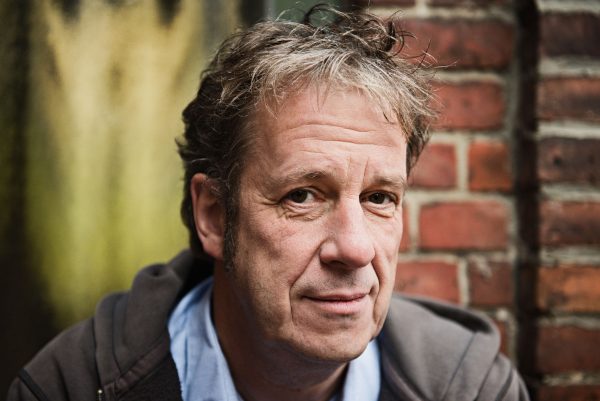
Matthias Wittekindt: Die Eisbären, die Toten und ich
Das zu Ende gegangene Jahr kommt mir vor wie eine Eislandschaft am Rand des Pols. Was einst eine weiße Weite aus dickem Eis war, auf der Eisbären sich nach unvorsichtigen Robben umsahen, ist nun keine Fläche mehr, sondern eine Landschaft charakterisiert durch Risse und Abstände gefüllt mit dunklem und wohl auch sehr tiefem Wasser.
Wie es sich mit der zerrissenen Eisfläche verhält, so war es auch mit dem Jahr. Man wusste seit langem, dass vieles nicht in Ordnung ist, ja folgenschwer sein wird, und nun wird es immer schlimmer. Was ich sagen will versteht sich, ich werde mich also nicht zu den weltpolitischen und nationalen Verwerfungen auslassen. Nur das. Die Resilienz, meine, wie die meiner Freunde, ist so verblüffend, dass man schon fast von Fatalismus sprechen müsste.
Ich komme nun zu dem, was in meiner Nähe passiert ist.
Das Jahr begann für mich erst mal wie immer. Ich saß, dick eingemummelt, schreibend auf meinem teils recht kühlen Balkon. Dann kam, ohne dass ich etwas hätte ahnen können, die Meldung, dass mein literarischer Agent Lars Schulze Kossack gestorben ist. Das hat mich traurig gemacht, sehr traurig. Und damit ist längst nicht alles gesagt.
Ich fand es ungerecht, denn Lars war noch jung, geradezu quirlig, bei gleichzeitig fundierter Kenntnis was seine Arbeit anging. Das Besondere an Lars als Agent: Er fuhr zu den Verlagen hin, wusste immer genau mit wem er über welches Projekt sprechen muss und verschickte die Texte nicht als Rundmail mit Anschreiben. Jedesmal, wenn ich ihn anrief war meine erste Frage: „Na, in welchem Zug sitzt du?“ Ich sehe und höre uns noch heute. So deutlich, als wär nichts vergangen.
Und wie es manchmal so ist, kam noch mehr Schlimmes dazu. Antje und ich haben viele Stunden in Krankenhäusern verbracht, in der Hoffnung, dass für andere etwas gut ausgeht.
Ein schweres Jahr, so könnte man sagen.
Was aber dann doch wieder gut war in dieser Zeit, man hat mir und Antje beigestanden, die Freunde haben sich als Freunde gezeigt. Es ist eben so: Die, welche man kennt, zeigen sich in so einem Jahr mehr, als in wohligen Zeiten.
Ach ja, fast vergessen: Eisbären, als hätte Mutter Natur das Schlimmste bereits vor langem geahnt, die können schwimmen. Schön sieht das für meinen Geschmack nicht aus, aber sie kommen so von Scholle zu Scholle.
Mit den besten Wünschen fürs nächste Jahr – Matthias.
Mit Vor Gericht startete Matthias Wittekindt 2021 eine neue Reihe um den pensionierten Kriminaldirektor Manz im Kampa Verlag. Band 5, Hinterm Deich, wurde gerade mit dem Deutschen Krimipreis 2024 ausgezeichnet.