
Of all that I read and saw last year—books, movies, television, stage plays—I present herein my tip-top list of favorites in each of these story-telling forms.
But kindly do not confuse my commentary with criticism, for as Voltaire himself is reported to have said, “If critics were acrobats, they’d all be dead.”
Right then, my personal best of 2024—
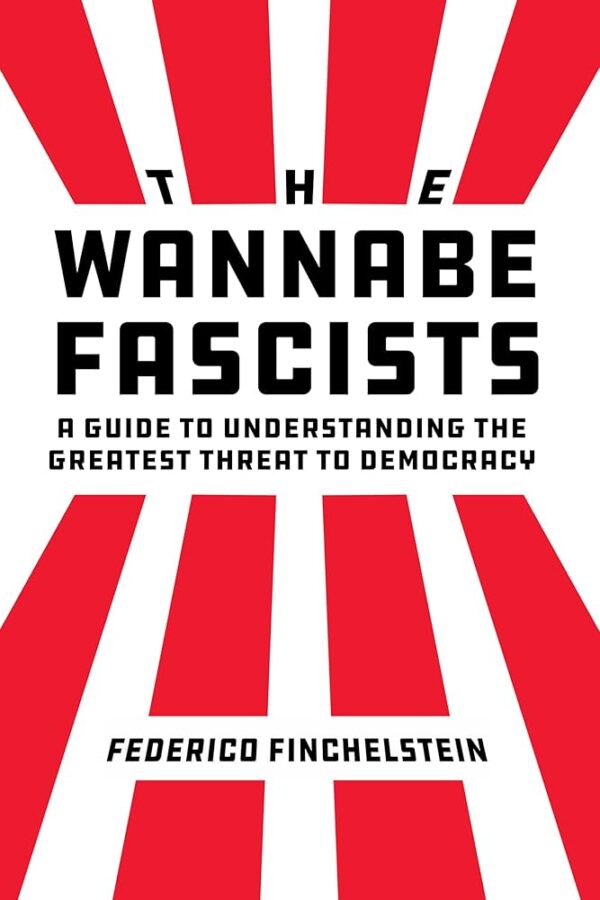
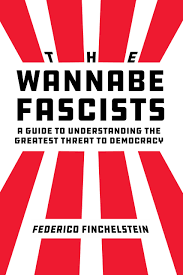
Books: „The Wannabe Fascists„
The dread of fascism was bred into the bone of scholar Federico Finchelstein, born in Argentina during the rise of a gruesome military dictatorship in the 1970s and early ‘80s under the command of Jorge Rafael Videla (1925-2013). The regime was characterized by so-called “death drops,” wherein Señor Videla’s political opponents were flung from cargo planes aloft over the Atlantic Ocean.
Currently chairman of the history department at Manhattan’s New School for Social Research, Professor Finchelstein has authored several previous books on the global scourge that haunts him—fascism. His new one is a cri de cœur with an understated title: “The Wannabe Fascists: A Guide to Understanding the Greatest Threat to Democracy.”
In it, the author describes how a social climate of grievance begins the step-by-step process of twisting legitimate reform into police state control of the citizenry. The professor knows whereof he speaks—especially in the context of America in the grip of Donald J. Trump.
In early November of 2020, soon after Donald Trump was soundly defeated for reëlection for a second term as president—only to manufacture the Big Lie that that year’s contest was “rigged” against him—Mr. Finchelstein predicted an inevitability of the fascist playbook. Namely, the attempted coup d’état in January 2021, executed by thousands of armed bullies persuaded by Mr. Trump’s heated rhetoric to attack and vandalize the Capitol building in Washington.
And yet, four years later with another chance at power in November 2024, a slim but convincing majority of Americans returned the Big Liar to the White House, confirming Professor Finchelstein’s dread. And moving him to declare Donald Trump himself as the biggest threat-of-all-threats to democracy in the world.
As the professor said in an interview with the Washington Post, he analyzed the fascist style of our time:
“[Voters] are not considering that Trump is proposing magical solutions to real problems and that there is a problem with a leader [who] represents that his will is more important than reality itself…
“…What is really the trouble here is not the extremism but rather how this extremism is normalized in society, often in the media [and] not least in the voters. This used to be toxic politics, and suddenly it’s not.”
Read it and weep.
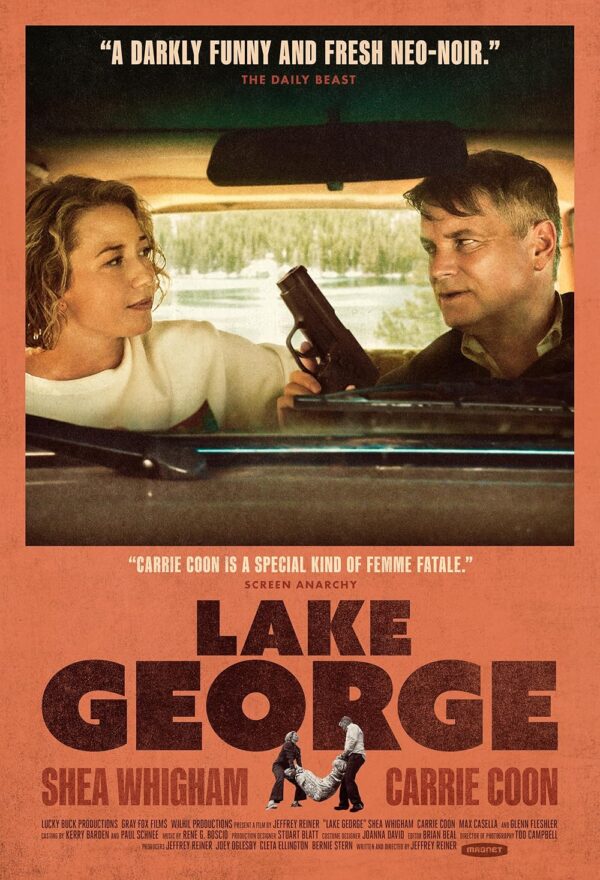
Movies: “Lake George” is a luminous new entry into the oxymoronic genre of “sunshine noir,” in which stark desert light replaces shadowy urban grit as a foreboding backdrop for crime and consequence.
Black humor and snappy dialogue also feature here, as customary ingredients of noir. Metaphor is front and center, too: Due to industrial pollution, swimming is no longer permitted in the movie’s namesake body of once pure and crystalline water in California’s interior.
Action centers around the characters Don, freshly sprung from the slammer after a ten-year stretch on a white collar wrap, and Armen, his former partner in crime now living the lush life in Los Angeles with his kooky blonde girlfriend Phyllis.
Don (played by Shea Whigham in a rare lead rôle), being penniless, and demanding that he cough up sixty-grand (€57,282), as his unpaid take from ill-gotten gains. Ever the chiseler, Armen strikes a deal: He’ll fork over the dough if Don will “take care” of kooky Phyllis (Carrie Coon).
Ever the gentle family man he used to be—a regular gent whose only blemish was a gambling problem that got him on the hook with Armen in the first place—Don is incapable of doing what Armen suggests. Instead, Don kidnaps the blonde kook with the aim of taking her by car, squawking all the way, to a hideout up the coast and into another state, then doubling back and lying to Armen that he indeed offed the troublesome dame.
Naturally, the dame has ideas of her own. En route to the hideout, Phyllis persuades Don that she knows the whereabouts of those buried ill-gotten gains—and then some—and that the two of them could dig up the whole kit and caboodle and shack up together on Easy Street.
Naturally, things go awry.
In the reality of these dark days, sunshine noir is a distracting comfort. So enjoy, with popcorn.
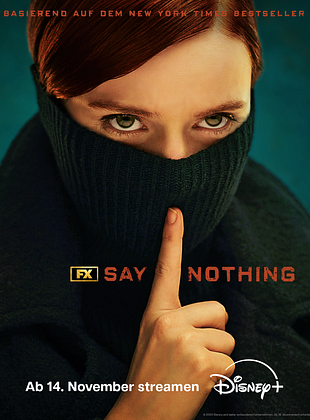
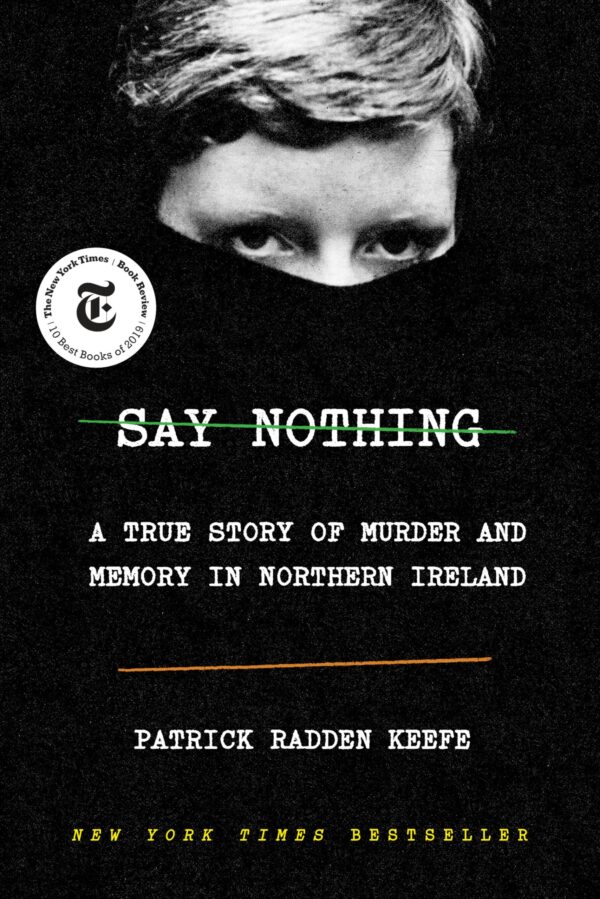
Television: „Say Nothing„. Based on the best-selling true crime book by journalist Patrick Redden Keefe, “Say Nothing” is a six-part television series that injects the violence of 1970s Northern Ireland into the supposed comfort of your home.
To know of “The Troubles” in 1970s Northern Ireland, as palpably related in both book and TV adaptation, is to be forever alert to insidious tribalism and bigotry anywhere in the world. Call this a gift of needful discomfort, the high purpose of artistic realism.
To know of Ireland writ large is to know that it makes no sense to be Irish, as am I, unless you understand that the world will break your heart.
—And how could it be otherwise of a land and a people cut in two as the rottenly bargained price of independence from eight hundred years of British oppression? The Republic of Ireland in the south, overwhelmingly Catholic, and Protestant Northern Ireland (Ulster) as an add-on to the so-called United Kingdom of Great Britain.
By way of opening interviews with the heroic Delours Price (1950-2013), the TV version of “Say Nothing” moves us through chapters of tragedy in the northeast corner of the Emerald Isle, starting with the bloody civil rights movement in the ‘60s that challenged injustices perpetrated against the minority Catholic population by a Protestant majority hewing to the British crown. Through Ms. Price’s witnessed telling, we become acquainted with the murders and deceptions and hunger strikes and bombings and betrayals that define “The Troubles.” Such horrid understatement.
Of those bombings, Delours played a part. In 1973, as a young volunteer in the Provisional Irish Republican Army (IRA) who in certain daring operations dressed as a nun, she was sent to prison for a notorious London bombing. In 1981, she won release.
Two years later, she married Belfast actor Stephen Rea, best known as the star of the 1992 film “The Crying Game”—of all things, largely about the Provisional IRA. The couple divorced in 2003. Ms. Price died in 2014 at the age of 62, still a steadfast opponent of the rotten bargain Ireland made with the so-called United Kingdom.
The poem that inspired Patrick Redden Keefe to write his book was penned as “Whatever You Say, Say Nothing” by Nobel laureate Seamus Heaney, who wrote of Northern Ireland in the ‘70s, in part:
O land of password, handgrip, wink and nod
Of open minds as open as a trap
Where tongues lie coiled, as under flames lie wicks
…
”Religion’s never mentioned here,” of course
“You know them by their eyes,” and hold your tongue
“One side’s as bad as the other,” never worse
Born in 1939 in Castledawson, Northern Ireland, Seamus Heaney died in Dublin in 2013. The cause: a broken heart, of course.
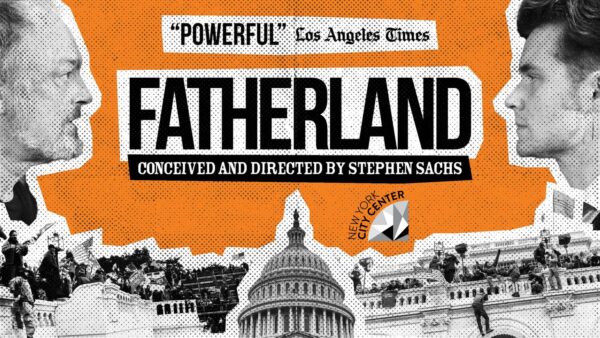
Theatre: „Fatherland“ – The Fountain Theatre. In 2024, I saw a dozen or more of the best that New York theatre proudly offers to us natives and to the world. I thoroughly enjoyed every single play (if not the physically crippling seats I had to endure). But the play I found most moving—because it pulled me back to the emotionally crippling years of life in my father’s house—was the short-run, Off Broadway production called “Fatherland.”
The playwright, so to speak, is a mélange of source material: court transcripts, case evidence, and public statements—all related to an April 2024 trial verdict in Washington, The United States vs. Guy Wesley Reffitt. Not one word of the “Fatherland” script was invented.
In the Reffitt case, the defendant was convicted on five criminal counts for his rôle in insurrection against the government in January of 2021, during which police officers were assaulted and later died as the Capitol building was attacked and vandalized to the tune of some $3 million (€2.9 million) in necessary repairs.
Inspired by the violent rhetoric of Donald J. Trump, Mr. Reffitt engaged with some three thousand fellow insurrectionists to halt—by any means necessary—a formal certification by Congress of the 2020 presidential election that Mr. Trump failed to win, blaming his loss on an evidence-free, coast-to-coast leftwing conspiracy to “rig” polling station apparatus in favor of his opponent, Joe Biden.
Currently incarcerated in a federal penitentiary, Mr. Reffitt (portrayed by Ron Bottita) was a true believer in whatever lie the notorious Big Liar ever cared to tell. Mr. Reffitt took as gospel whatever poured forth from Donald Trump’s kewpie doll lips—especially his rant about the U.S. becoming a “socialist dumping ground for criminals, junkies, Marxists, thugs, radicals, and dangerous refugees that no other country wants,” as so contained in the Trump bible, a/k/a “The Art of the Deal.”
Writ large, the Reffitt trial is the story of one son’s profoundly painful relationship with the man most central to his being. For it was Mr. Reffitt’s own boy, 18-year-old Jackson (played by Patrick Keleher), who contacted the Federal Bureau of Investigation to disclose his own father’s criminality on the day of insurrection in January ‘21.
Father and son tried mightily to understand, to at least tolerate, the land each one occupied; the resentments each one held. Father and son issued threats, argued furiously, yet at the same time loved one another in an unexpressed way.
At times on the edge of sweetness, they wept together, as when Jackson told Guy that he regarded his father as “pretty great.” Fathers hunger for such words, few as they may be.
At times on the edge of violence, they frightened one another—as when Reffitt père screamed at Reffitt fils, “I put you in this fucking world, I can take you out.”
At trial’s end, Jackson strode from the spectator seats to the defense table occupied by his father and his lawyers. Jackson kissed the man who put him in the world.
** **
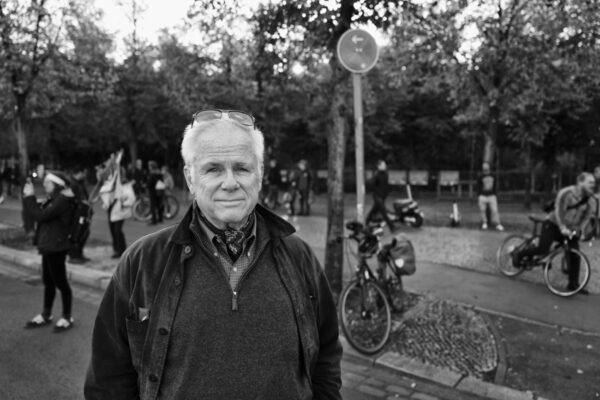
Thomas Adcock is America correspondent for CulturMag. His essays here.
Thomas Adcock
New York
917.539-3681
tadcocknyc@gmail.com
www.thomasadcock.com