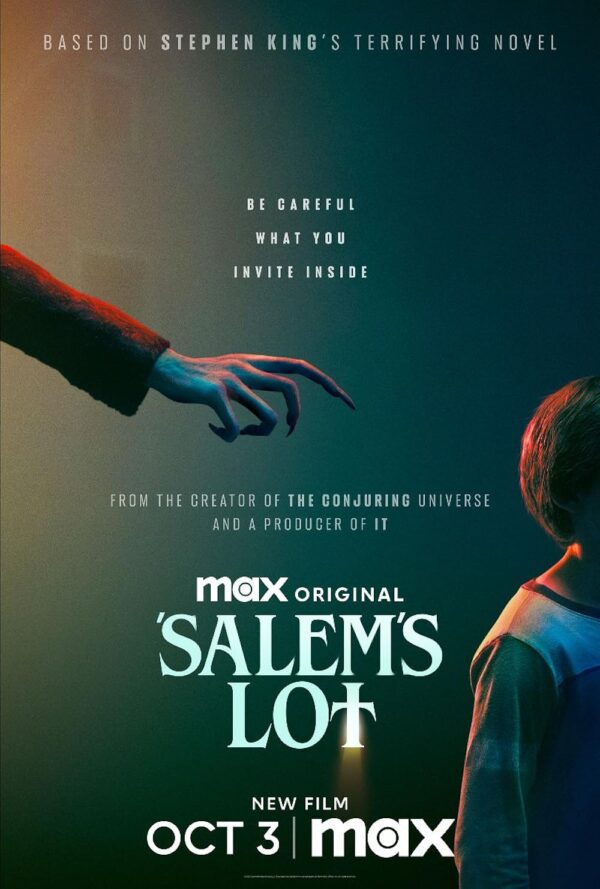
‘Salem’s Lot’ and the Horror of a Stephen King Adaptation
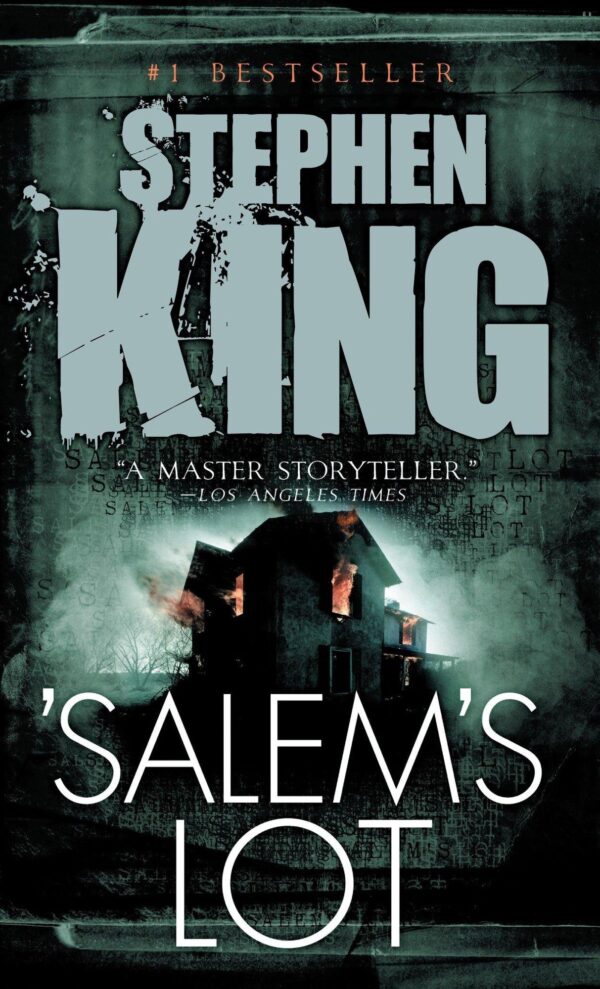
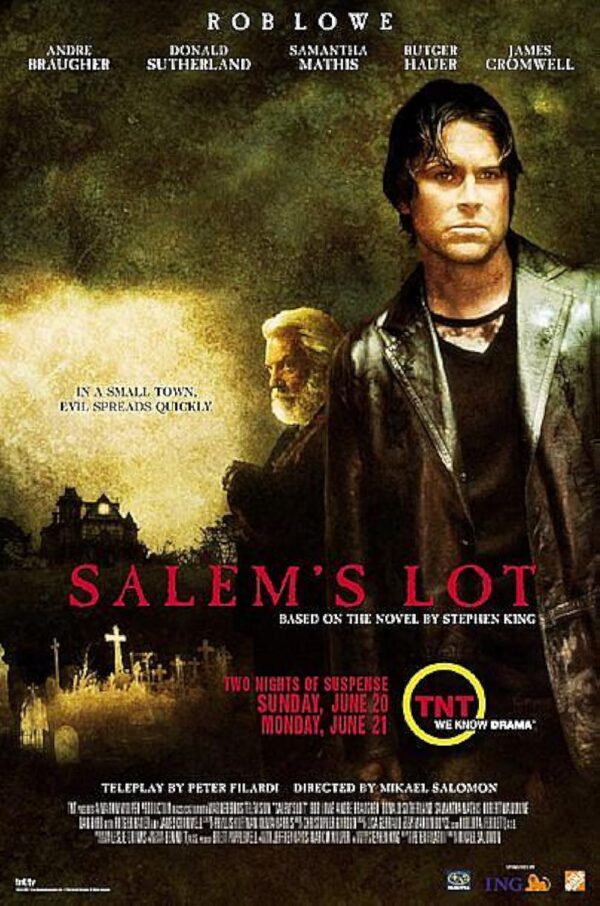
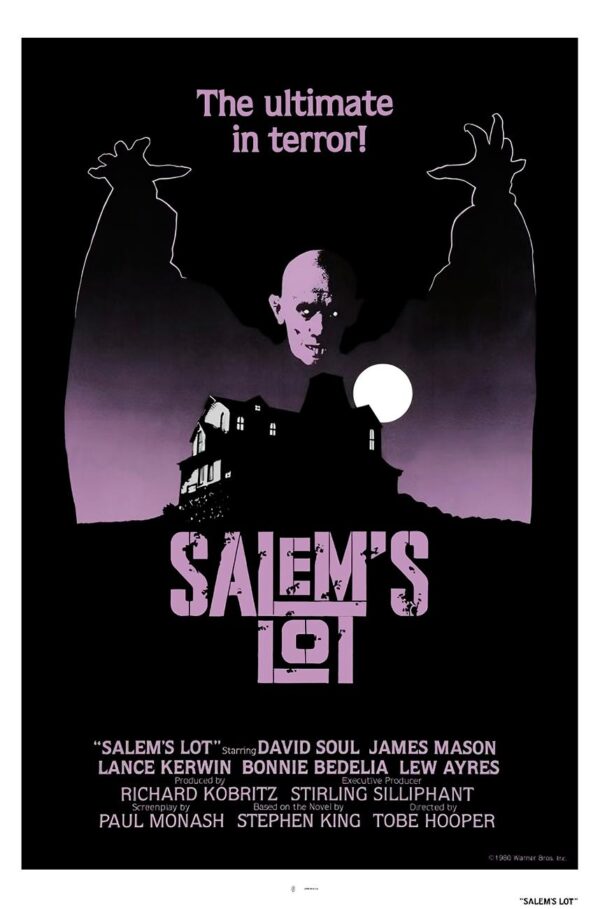
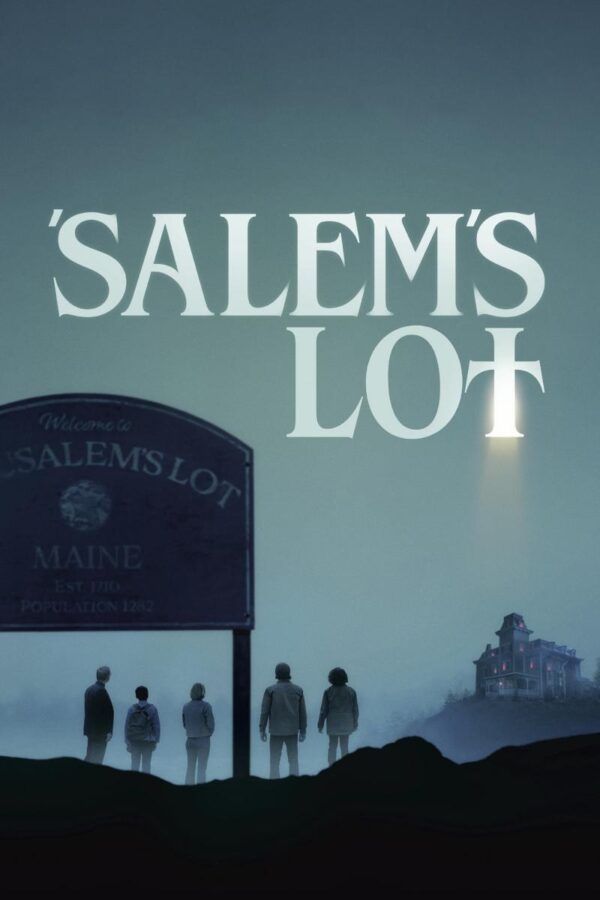
I’m not sure what compelled me to click ‘Play’ on the latest adaptation of “Salem’s Lot,” especially when there’s so much else out there in the aether. Maybe it’s because I always feel the urge to cram in a few horror movies in October. Or maybe it’s because I have a sentimental attachment to Stephen King’s original novel, which I read at a formative age and treated as a guidebook of sorts when learning to write a suspenseful sequence.
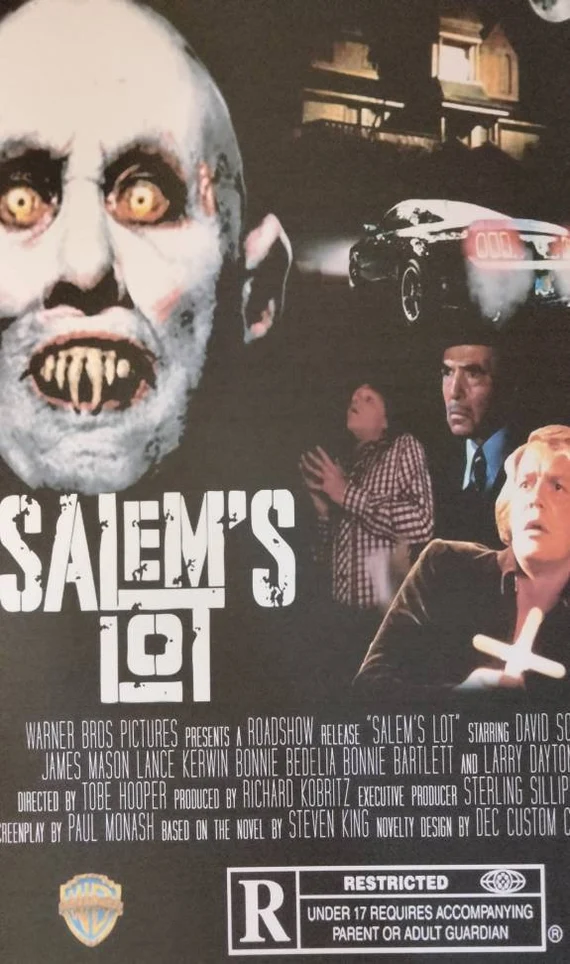
Spoiler alert: the movie isn’t great (“Just say it sucks!” screeches the punny part of my brain. “The joke is right there!”). In contrast to the novel, which is the slowest of slow burns, the movie rushes through the major plot checkpoints like a vampire bat injected with crystal meth, dropping random characters and half-completed story arcs along the way. The director claims his three-hour cut was murdered down to 90-odd minutes by the studio; if you loved the book, pretty much every creative choice in the film will annoy you, including how the head vampire, Barlow, is reduced from a cunning and perpetually amused adversary to the Dollar General version of Nosferatu.
Perhaps I’m being too harsh. It’s difficult to get a movie made, especially when it’s a movie based on a beloved novel so lengthy that only a miniseries can probably do it full justice. But as I sat through vampires shredding a small town, my mind drifted to other movie and TV adaptations of Stephen King’s works—and why so many don’t succeed, despite the best intentions of their creators (literally nobody ever wants to sit through the studio-mangled adaptation of the “The Dark Tower” again, Idris Elba or no).
For decades, King was saddled with a reputation for churning out shlock—when he won the National Book Award, the scholar Harold Boom infamously framed it as “another low in the shocking process of dumbing down our cultural life.” Whatever your opinion on his colloquial prose style, King is a master of atmosphere and world-building; his books often feel like 95 percent buildup and five percent action (People’s Exhibit A on that front is “Dreamcatcher,” where the hardcore action, indicated by a chapter titled “The Chase Begins,” doesn’t kick in until page 431). He also devotes huge chunks of narrative to his characters’ inner lives, the fears and desires that often lead them to committing horrible acts.
Combine that with many of the books’ epic lengths, and you can see why it’d be difficult to adapt much of his oeuvre into any visual medium. The adaptations that succeed seem to fall into three categories:
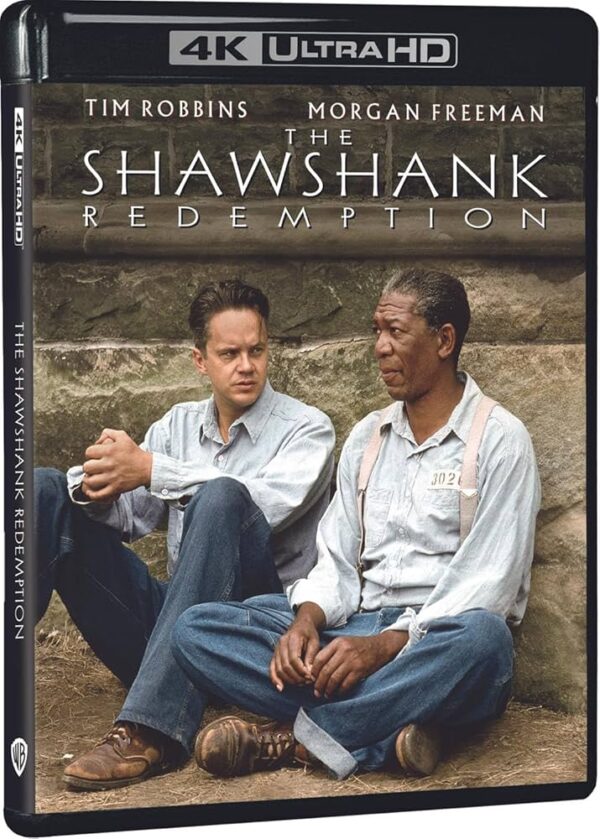
Adapted Short Stories and Novellas: “Shawshank Redemption” is arguably the best of all King adaptations, a genuine masterpiece anchored by strong performances; there’s also “Stand by Me,” “1408,” and, if you’re in the right mood for Ah-nold, “The Running Man.” In all cases, the source material is short enough to comfortably break into a 120-page script.
Great Director Decides to Chuck the Source Material: “The Shining” (my personal favorite), “Doctor Sleep” (an underrated sequel), and “The Mist” all had fantastic directors who decided to deviate in core ways from the original writing, with an eye toward making the proceedings more cinematic. I love “The Mist,” but the movie chucks the story’s drifty non-ending (“Hartford… hope…”) in favor of a finale that might be the most nihilistic five minutes devoted to celluloid, and it works terrifically.
Some Books are More Adaptation-Friendly Than Others: “Carrie,” “The Dead Zone,” and “Misery” are among the King novels with enough visual beats and action sequences to power a good movie; it doesn’t hurt that these titles also had ultra-competent writers and directors.
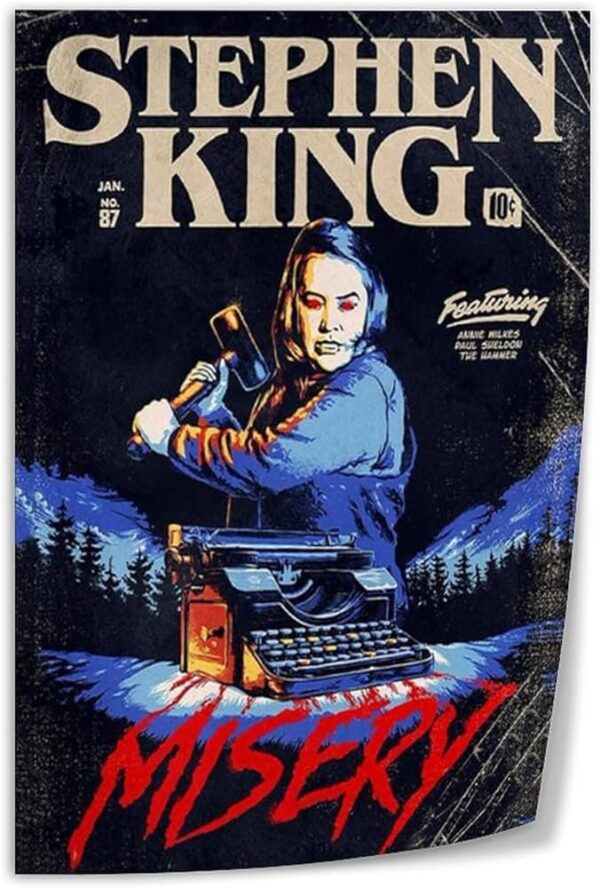
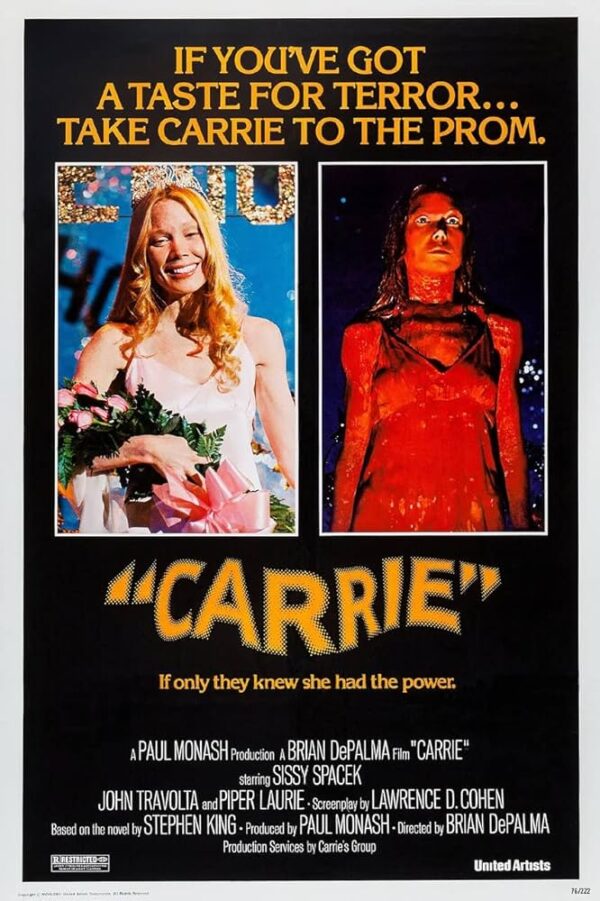
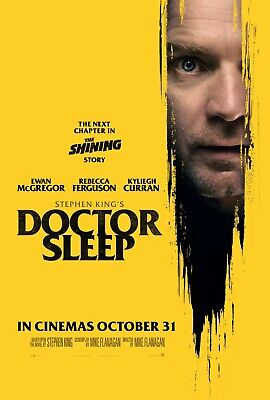
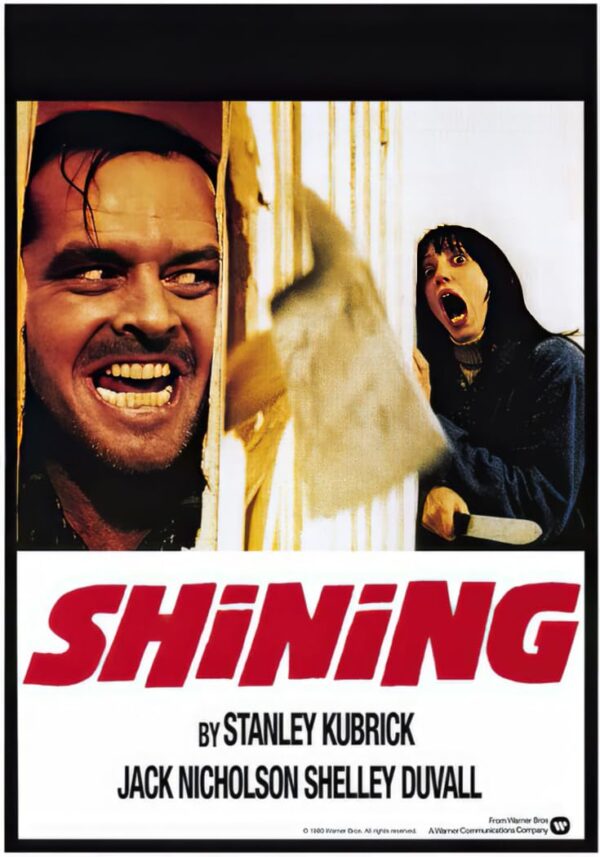
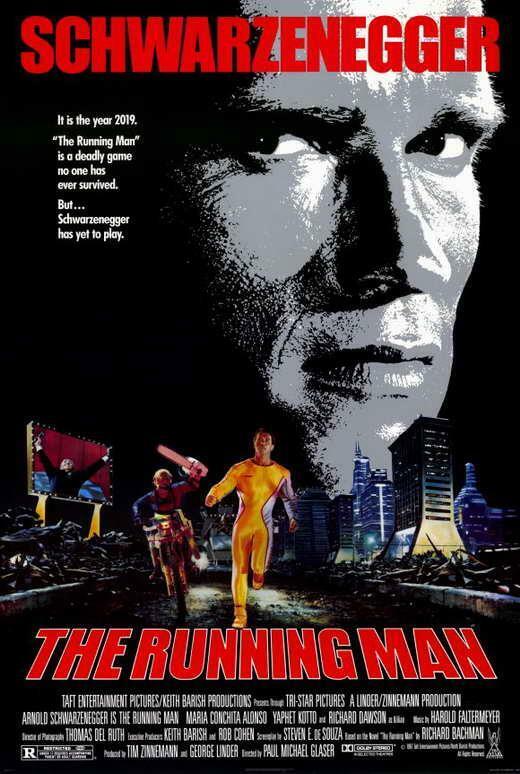
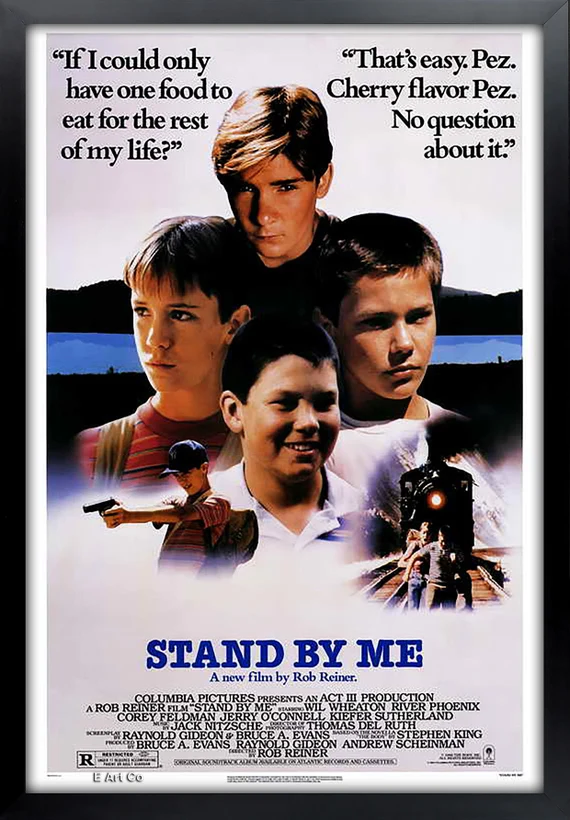
King is one of the most-adapted writers of all time, though, and beyond a few memorable films, the sheer amount of crap on that filmography is something to behold. You have the zero-budget clunkers churned out by well-meaning filmmakers who prized gore over anything like a coherent plot or half-decent acting, the dull magic-realism “prestige” movies loaded with Oscar winners phoning it in, and the just plain bizarre, like “Dreamcatcher,” where the filmmakers gamely tried to “normalize” King’s opioid-dream alien invasion plot and made everything infinitely stupider in the process. Without King’s intricate world-building and generous amounts of character work, the external events often fall flat onscreen.
Your own mileage may vary with all this, of course. For instance, I have an intense attachment to “The Stand,” that doorstop of a post-apocalyptic novel, and I think every attempt at putting it onscreen has been awful—but I know more than a few people who think the 1994 miniseries adaptation is marvelous.
Now I’m wondering if the new “Salem’s Lot,” if it had another hour or four to show the viewers the titular town’s secrets, and how its residents were bad people long before they became vampires, might have been a far better experience. (Then again, I could just rewatch “Midnight Mass,” Mike Flanagan’s small-town vampire movie that uses bloodsuckers to explore thorny questions of faith and evil—that’s an experience that sticks with you.)
** **
Nick Kolakowski is the author of „Maxine Unleashes Doomsday“ and „Boise Longpig Hunting Club“ as well as the Love & Bullets trilogy of novellas. His noir fiction has appeared in Tough, ThugLit, Mystery Tribune, Plots With Guns, and various anthologies. His „Payback is Forever“ (Shotgun Honey 2022) is inspired clearly by the novels of Richard Stark. Our review here (in German). – See also his Hell of a Mess. A Love & Bullets Hookup.

Nick Kolakowski, geboren 1980, aufgewachsen in Washington. D.C., hat Geschichte in Chicago studiert. Er schreibt Romane, Kurzgeschichten, Lyrik und Essays, viele davon über Crime Fiction und verwandte Themen. Seine Texte erscheinen u. a. in der Washington Post, in Shotgun Honey, North American Review, The Evergreen Review, Rust & Months. Kolakowski lebt in New York City. Eine Besprechung des von Parker inspirierten „Payback is Forever“ in unseren Bloody Chops.
Bei Suhrkamp auf Deutsch: Love & Bullets.
His essays with us.
His website nickkolakowski.com
His column „Smoking Gun“ with us:
„Rebel Ridge“: Calmly Burn the Whole Thing Down
‘Monsieur Spade’ and the Faustian Bargain
John Woo is Remaking ‘The Killer.’ But Why?
The Newest ‘Ripley’ Series is Stunning and Flawed
‘Sugar’: Not the Neo-Noir Revival We Need
Moral Redemption in Noir: Is It Possible?
What Makes Jack Reacher Tick?
‘True Detective: Night Country’ Tries to Make the Familiar into Something New
Is David Fincher’s ‘The Killer’ a Comedy?
Rewatching ‘Drive’: Gosling as Noir’s Apex Predator
Elmore Leonard – City Primeval
Cormac McCarthy Used Crime Fiction’s Tropes to Make Masterpieces
Parker: Donald Westlake’s One Amazing Trick
Cosby, Winslow, Pruitt: Three Heavy-Hitting Thillers for Summer
Weed-Based Crime Thrillers are Going Up in Smoke
‘The Last of Us’: Crime in the Post-Apocalypse
What Made “Glass Onion” and “Knives Out” So Popular?
Jordan Harper’s One-Two Punch of Crime Fiction Deserves a Wide Audience
‘True Detective’ Season 2: Was It Better Than We All Thought?
From ‘Touch of Evil’ to ‘True Detective,’ Long Shots are Crime Films’ Secret Weapon
Michael Mann, again: What Michael Mann Teaches Us About Enduring Crime Fiction
„Heat 2“ – How Do You Craft a Sequel to a Masterpiece?
4 Ways Tarantino’s “Once Upon a Time in Hollywood” Novel Stands Out From the Film.
On „Heat“: Manhunter Takes Down Thief: How Michael Mann’s Early Career Led to ‘Heat’
The Most Honest Nihilism – on „The Way of the Gun“
No, Time to Die – The latest James Bond movie digs into the fatalism at the iconic spy’s core.
Cormac McCarthy’s Overlooked Masterpiece? – „The Councelor“
„Nightmare Alley“ – How Guillermo del Toro’s Film Alters a Masterpiece Noir Novel
David Cronenberg – The Carnal Crime of “A History of Violence” and “Eastern Promises”
With Parker, Donald E. Westlake Pulled Off Crime Fiction’s Most Spectacular Magic Trick
Guy Ritchie’s Return to Crime Films is Worth Watching