- Home
- Crimemag
- CrimeMag Oktober 2026
- CrimeMag September 2026
- CrimeMag Juli-August 2026
- CrimeMag Juni 2026
- CrimeMag Mai 2026
- CrimeMag April 2026
- CrimeMag März 2026
- CrimeMag Februar 2026
- CrimeMag Dezember 2025
- CrimeMag November 2025
- CrimeMag Oktober 2025
- CrimeMag September 2025
- CrimeMag Juli 2025
- CrimeMag Juni 2025
- CrimeMag Mai 2025
- CrimeMag April 2025
- CrimeMag März 2025
- CrimeMag Februar 2025
- CrimeMag Dezember 2024
- CrimeMag November 2024
- CrimeMag Oktober 2024
- CrimeMag September 2024
- CrimeMag Juli 2024
- CrimeMag Juni 2024
- CrimeMag Mai 2024
- CrimeMag April 2024
- CrimeMag März 2024
- CrimeMag Februar 2024
- CrimeMag Dezember 2023
- CrimeMag November 2023
- CrimeMag Oktober 2023
- CrimeMag September 2023
- CrimeMag Juli 2023
- CrimeMag Juni 2023
- CrimeMag Mai 2023
- CrimeMag April 2023
- CrimeMag März 2023
- CrimeMag Februar 2023
- CrimeMag Dezember 2022
- CrimeMag November 2022
- CrimeMag Oktober 2022
- CrimeMag September 2022
- CrimeMag Juli 2022
- CrimeMag Juni 2022
- CrimeMag Mai 2022
- CrimeMag April 2022
- CrimeMag März 2022
- CrimeMag Februar 2022
- CrimeMag Dezember 2021
- Editorials
- CrimeMag November 2021
- CrimeMag Oktober 2021
- CrimeMag September 2021
- CrimeMag August 2021
- CrimeMag Juli 2021
- CrimeMag Juni 2021
- CrimeMag Mai 2021
- CrimeMag April 2021
- CrimeMag März 2021
- CrimeMag Februar 2021
- CrimeMag Dezember 2020
- CrimeMag November 2020
- CrimeMag Oktober 2020
- CrimeMag September 2020
- CrimeMag August 2020
- CrimeMag Juli 2020
- CrimeMag Juni 2020
- CrimeMag Mai 2020
- CrimeMag April 2020
- CrimeMag März 2020
- CrimeMag Februar 2020
- CrimeMag Dezember 2019
- CrimeMag November 2019
- CrimeMag Oktober 2019
- CrimeMag September 2019
- CrimeMag Juli 2019
- CrimeMag Juni 2019
- CrimeMag Mai 2019
- CrimeMag April 2019
- CrimeMag März 2019
- CrimeMag Februar 2019
- CrimeMag Dezember 2018
- CrimeMag November 2018
- CrimeMag Oktober 2018
- CrimeMag September 2018
- CrimeMag August 2018
- CrimeMag Juni 2018
- CrimeMag Mai 2018
- CrimeMag April 2018
- CrimeMag März 2018
- CrimeMag Februar 2018
- CrimeMag Januar 2018
- CrimeMag Dezember 2017
- Musikmag
- Litmag
- Rubriken
- Specials
- Highlights
- Über uns

All posts by Nick Kolakowski


What Makes Jack Reacher Tick? It took me a long time to warm up to Jack Reacher. When Lee Child published the first books in his long-running series about the gigantic brawler, I was still in high school and more focused on reading as many cerebral mysteries as I could find—locked-room murders and erudite detectives interested me more than fisticuffs. My opinion changed a decade later, when my job as a journalist necessitated I spend most of my time on the road, often trapped in airports large andRead More

‘True Detective: Night Country’ Tries to Make the Familiar into Something New As a series, “True Detective” has always been strongest when focused on characters instead of plot. For example, the chemistry between Matthew McConaughey (as haunted detective Rust Cohle) and Woody Harrelson (as ostensibly upstanding but deeply cracked detective Marty Hart) is what made the show’s first season so iconic; but ask a viewer to break down the actual story, and they’d probably mutter something about serial killers and corrupt families before trailing off into silence. It was aRead More
Is David Fincher’s ‘The Killer’ a Comedy? Given his penchant for ultra-dark cinematography, twisted characters, and brutal endings, it’s easy to forget that David Fincher is more than capable of slipping a comedic beat or two into his movies. A murderer’s use of an ultra-sappy Enya song during a torture sequence in “The Girl with the Dragon Tattoo,” or Kevin Spacey’s bone-dry witticisms in “Seven,” are just two examples of Fincher lightening the mood a tad. Fincher’s latest film, “The Killer,” likewise features some funny bits: the titular assassin’s useRead More

Gosling as Noir’s Apex Predator Once a year, usually in October, I re-watch the neo-noir film Drive (2011). The synthesis of pop soundtrack, neon visuals, and bleak subject matter triggers something deep in my mind, leaving me oddly happy. There are some aspects of the plot I still don’t quite understand, but every time I finish the film, I come away with the same thought: It’s physically difficult to stomp someone to death in an elevator. Near the end of the film, when Ryan Gosling’s otherwise-nameless Driver slams his boot through theRead More

The Long, Strange Afterlife of Jim Thompson It was Jim Thompson’s 117th birthday last week. I would have missed it, except a handful of noir authors spent the day posting online about their favorites among his thirty novels. “The Killer Inside Me” generally seems to be the work most prized by crime-fiction aficionados, followed closely by “Pop. 1280” and “The Grifters.” All the reminiscing made me remember when I attended a panel at a recent Bouchercon, North America’s largest crime-fiction conference. A prominent Canadian newspaper critic at the microphone breezilyRead More

I recently picked up a copy of Elmore Leonard’s “City Primeval,” published in 1980. Despite plowing through many of the master’s forty-or-so novels over the years, I hadn’t read that one, and I was curious because it serves as the basis of the new television mini-series “Justified: City Primeval.” As I quickly discovered, “City Primeval” sits in an uneasy place within Leonard’s broader bibliography. The central conflict, in which upright lawman Raymond Cruz faces off against vicious criminal Clement Mansell (nicknamed “The Oklahoma Wildman”), echoes the Westerns that Leonard churnedRead More

Cormac McCarthy Used Crime Fiction’s Tropes to Make Masterpieces The late Cormac McCarthy, widely regarded as the literary heir to Herman Melville and William Faulkner, a traditionalist in a sea of deconstructionists, had a flair for violence. Sometimes he boiled everything down to the brutal essentials. From his novel “No Country for Old Men”: “Chigurh stepped into the doorway and shot him in the throat with a load of number ten shot. The size collectors use to take bird specimens. The man fell back through his swivel-chair knocking it overRead More

Donald Westlake’s One Amazing Trick I started working on a new novel about a month ago. It’s a heist tale set in Manhattan in 1962, with brief sojourns to upstate New York and beyond. Originally, I had every intention of keeping my main character’s backstory to a minimum—or not mention it at all. I wanted to emulate Donald Westlake writing as Richard Stark, who managed to complete 24 novels about Parker, the epitome of a brutal thief, without giving the character any kind of history to speak of. As IRead More

Cosby, Winslow, Pruitt: Three Heavy-Hitting Thillers for Summer It’s springtime in New York. The trees are budding, the weather is warming, and across the street from my apartment, someone decided to celebrate a football game by firing a gun in the air. A season of exuberance, in other words. I’m working on a heist novel set here in the 1960s, and while the writing has been fine, at some point I’ll need to take a little mental-health break and bike to the beach. Fortunately, I’ll have my choice of greatRead More

Weed-Based Crime Thrillers are Going Up in Smoke Last weekend, as I was driving through the snowy wastes of New England, I spied a sign for a legal weed dispensary. I don’t generally partake in pot—whiskey and the very occasional cigar have always been my vices—but I was so intrigued by the novelty that I pulled into the dispensary’s parking lot. Before I even climbed out of the car, I thought: If I were a character in one of my books, how would I rob this place?(This is the crime writer’sRead More

‘The Last of Us’: Crime in the Post-Apocalypse I thought the world would have tired of zombie narratives by this point. But “The Last of Us,” the new show on HBO, is rapidly becoming a genuine hit. Based on a bestselling video game, the series centers on a taciturn smuggler (played with growling, almost Eastwood-style charisma by Pedro Pascal) as he escorts a snarky teenage girl (played by Bella Ramsey) across the wasteland that was once the United States. Along the way, they must fend off people infected with aRead More

What Made “Glass Onion” and “Knives Out” So Popular? In late December 2022, like millions of other people aggravated by the holidays, I turned to the latest Daniel Craig movie, “Glass Onion,” for a bit of distraction. Just in case you’re one of the few who’s managed to dodge Netflix’s massive promotional campaign for the film, it focuses on the continuing adventures of Benoit Blanc (Craig), a freelance detective with a genteel Southern accent and impeccable taste in suits, as he attempts to solve yet another elaborate murder-mystery. “Glass Onion”Read More

Jordan Harper’s One-Two Punch of Crime Fiction Deserves a Wide Audience In June 2017, Ecco/HarperCollins released Jordan Harper’s “She Rides Shotgun.” The novel follows an 11-year-old girl, Polly, and her father, Nate, who’s fresh out of jail after a long stint for doing very bad things. The two make their way across the American West, relentlessly pursued by a murderous gang known as Aryan Steel. The novel won an Edgar Award for Best Debut Novel, and over the years it gained a cult following among crime writers, passed around andRead More

‘True Detective’ Season 2: Was It Better Than We All Thought? The first season of “True Detective,” starring Matthew McConaughey and Woody Harrelson as Louisiana detectives pursuing a serial killer, is considered a masterpiece of mood, a neo-noir that expertly delivered its plot twists and existential despond. When the show’s second season debuted in 2015, it was lambasted as a poor follow-up, a half-baked mess of classic noir tropes and overindulgent acting. But was it really that bad? Or did it just suffer in comparison with its predecessor? Just inRead More

From ‘Touch of Evil’ to ‘True Detective,’ Long Shots are Crime Films’ Secret Weapon I re-watched part of Orson Welles’ “Touch of Evil” the other night, for a project I’m considering. I’d forgotten its technical brilliance; the movie might be 64 years old, but the camera slithers through the grittier stretches of the U.S.-Mexican border with a suppleness that’s thoroughly modern. Ever since, generations of crime-film directors have used ultra-long shots as a tool for different emotional effects and story beats—they’re a secret weapon of sorts. In case you’ve neverRead More

What Michael Mann Teaches Us About Enduring Crime Fiction I’ve had Michael Mann on the brain lately. As a crime-fiction fan, how could I not? “Heat 2,” the novel he co-wrote with Meg Gardiner, is about to hit bookstores around the world; it’s a prequel/sequel to “Heat,” his epic cops-and-robbers masterpiece. He’s gearing up a biopic about Enzo Ferrari in Italy, and supposedly the cinematic adaptation of “Heat 2” is on the way at some point. A few months ago, as the massive PR campaign around “Heat 2” cycled to life, I had theRead More

„Heat 2“ – How Do You Craft a Sequel to a Masterpiece? Sequels are a tricky business. The good ones seem few and far between (“The Godfather Part II” springs immediately to mind, along with “Mad Max: Fury Road”), while the terrible ones litter the pop-culture landscape (as much as I loved the original “Fight Club” novel, I find its two graphic-novel follow-ups unnecessary and terrible). With that truism in mind, I picked up an advance copy of “Heat 2,” a new novel by Michael Mann and Meg Gardiner, withRead More

Guy Ritchie’s Return to Crime Films is Worth Watching Some directors’ skills seem to fade with time. For every Martin Scorsese producing decades’ worth of masterpieces, others seem to trail off (Hitchcock comes to mind, although “Frenzy,” his second-to-last film, has flashes of editing genius). Perhaps that’s why Quentin Tarantino has promised to quit after directing ten films; he doesn’t want to overstay his welcome. I was thinking quite a bit about directors losing their touch as I boarded a cross-continental flight with two movies downloaded onto my trusty tablet,Read More

With Parker, Donald E. Westlake Pulled Off Crime Fiction’s Most Spectacular Magic Trick When the COVID-19 pandemic began, I found myself re-reading the Parker novels, which Donald E. Westlake wrote under the pseudonym Richard Stark. There was comfort in most of the novels’ repetitive plots: Parker, the master thief, plans an elaborate heist alongside some other criminals; the heist inevitably falls apart; Parker survives and claims the money (usually killing a lot of people in the process). To be fair, not every Parker novel follows that exact pattern—but they all embrace noirRead More

The Carnal Crime of “A History of Violence” and “Eastern Promises” Canadian director David Cronenberg has spent his career studying the carnal—the ways that flesh transforms, grows, merges with other flesh, and dies. He’s also the consummate genre-jumper: Having made his name in body horror (with ‘70s and ‘80s classics such as “The Brood” and “Scanners”), he expanded into other genres such as auto-erotica (“Crash”), literary adaptation (“Naked Lunch”), and, in this century, a pair of crime films (“A History of Violence” and “Eastern Promises”). “A History of Violence” andRead More

How Guillermo del Toro’s Film Alters a Masterpiece Noir Novel William Lindsay Gresham’s “Nightmare Alley,” published in 1946, is the quintessential noir novel, filled with desperate characters scrambling to survive in a bleak world where everything is a con: religion, spirituality, business, psychotherapy, even love. The novel’s main character, Stanton Carlisle, is utterly at home in this harsh landscape. Starting off as a carnival worker during the closing years of the Great Depression, Stanton develops a talent for manipulating anyone in his orbit; within a few years, he reinvents himselfRead More

Cormac McCarthy’s Overlooked Masterpiece? Like many of the best noirs, Cormac McCarthy’s “No Country for Old Men” is all about doom. Deep in the Texas desert, Vietnam veteran Llewelyn Moss stumbles upon the aftermath of a cartel shootout and decides to take the money he finds there—which puts him firmly in the sights of the unstoppable Anton Chigurh, a boltgun-wielding psychopath who’s tasked with finding the cash. The film adaptation of “No Country for Old Men,” written and directed by Joel and Ethan Coen, is a masterclass in tension. AsRead More

No, Time to Die The latest James Bond movie digs into the fatalism at the iconic spy’s core. Since the publication of Ian Fleming’s “Casino Royale” in 1953, James Bond has been synonymous with a particular brand of escapism. A naval intelligence officer during World War II, Fleming leveraged his experience to create an idealized version of a spy, one who wore great suits and drove fast cars while he rendered the West safe for freedom and commerce. The James Bond films doubled down on the character’s fantasy potential, boostedRead More
The Most Honest Nihilism Crime fiction (and crime film) has always had an uneasy relationship with the violence it portrays. Every creator knows that a large portion of their audience slaps money down for a full helping of murder and mayhem—and yet, so many go out of their way to insert a bit of moral finger-wagging into the narrative. Sometimes this appeal to morality is overt, as in the original “Scarface” (1932), when director Howard Hawks was forced to add scenes in which characters condemned the gangster lifestyle; in others,Read More

Manhunter Takes Down Thief: How Michael Mann’s Early Career Led to ‘Heat’ By Nick Kolakowski Michael Mann’s “Heat” (1995) is widely considered a cinematic masterpiece. Not only do we follow as L.A. detective Vincent Hanna (Al Pacino) chases ultra-disciplined thief Neil McCauley (Robert De Niro) across the city, but we also dip into the lives of characters tangential to that pursuit—wives, daughters, hustlers, marks, cops, and criminals who are often fully realized despite having relatively little screen-time. Like many masterpieces, “Heat” didn’t emerge fully formed. You could argue that muchRead More

4 Ways Tarantino’s “Once Upon a Time in Hollywood” Novel Stands Out From the Film By Nick Kolakowski Books adapted from movies don’t have a sterling reputation. They’re often viewed as slapdash cash-grabs by writers-for-hire, despite some notable examples to the contrary—for example, Arthur C. Clarke’s “2001: A Space Odyssey” (written concurrently with the screenplay) and Alan Dean Foster’s “Alien.” Now Quentin Tarantino is providing his own twist on this odd genre with the novelization of “Once Upon a Time in Hollywood,” the 2019 movie he wrote and directed. TheRead More
Show Posts


1 bild / 100 worte
MOORBAUER
Stella Sinatras URknall

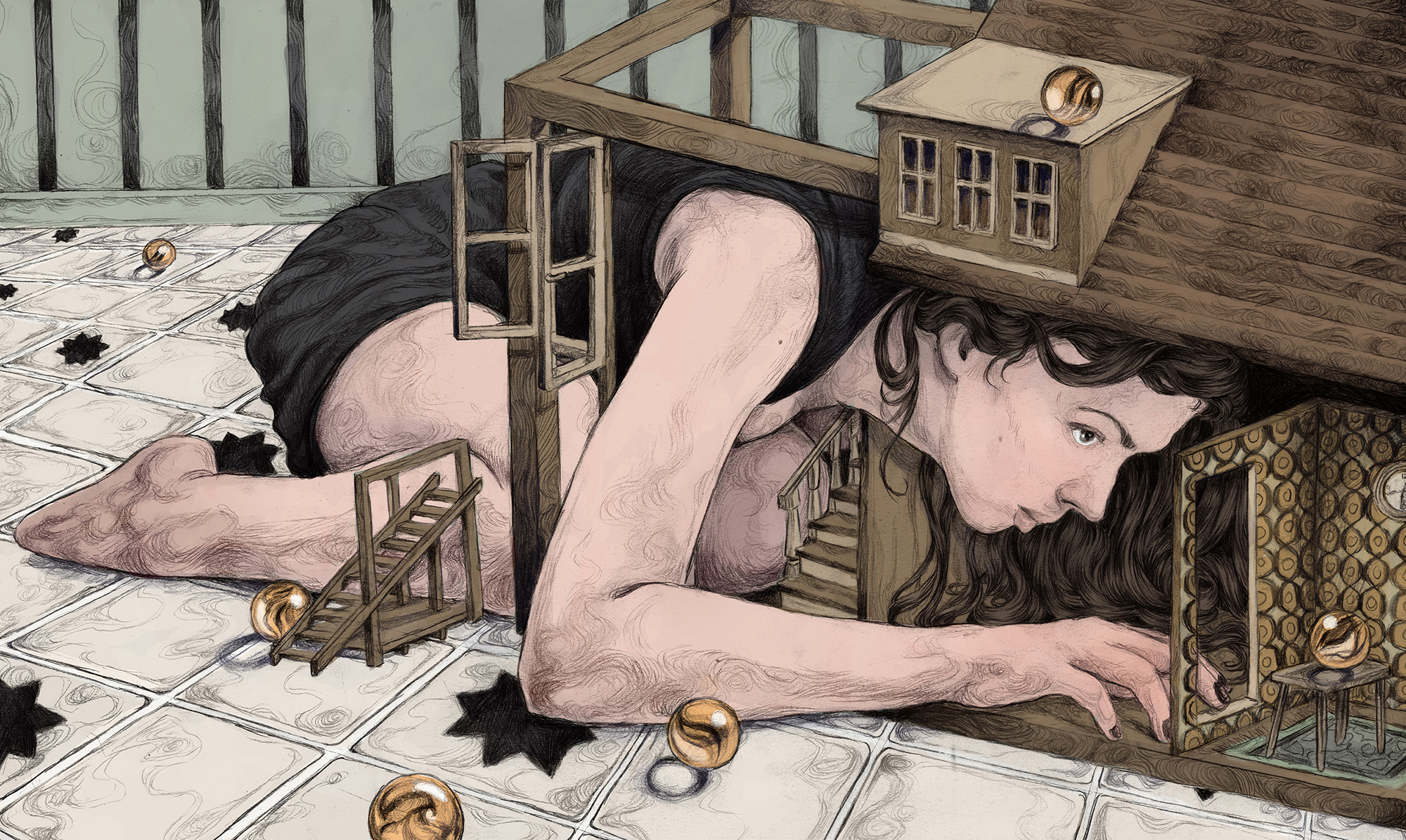
Es war einmal, vor 100 Jahren, eine Bäuerin im Moor. Nach dem Krieg verkaufte sie Kaffee und Kuchen an die Männer, die ihre Schiffe die Peene hochzogen. (Eher Schnaps, wendet ein der Kollege, dessen Opa Torf stach bei Bremen.) Und ach, dieser Vollmond, das bleiche Licht auf nächtlichem Schilf. Wer reitet so spät. Die Stille. Jede Leserin kennt das Moor, aus „Sturmhöhe“, dessen Verfasserin dort lebte und starb. She made haste to leave us, schrieb ihre Schwester, und über das Buch: Es sei ein Koloss, gehauen in einer primitiven, wild blühenden Werkstatt, dark and frowning, die Liebe darin – dämonisch –
Bild: Eleonore H., MERCI.

Inselcharme! Gesucht ist das Bundesland, in dem ein humorvoller Professor des 18. Jahrhunderts wirkte. Zu gewinnen gibt es ein Buch.
Zum Herbsträtsel 2026
Veranstaltungs-Tipp: COMICFESTIVAL HAMBURG 2. – 4. OKTOBER