‘Where the Bones Lie’ and the Engine of California Noir
I first arrived in Los Angeles on a magazine assignment. A firefighting plane had almost crashed while extinguishing a wildfire in the nearby hills, prompting a massive investigation, and my editor wanted me to write a story about the brave pilots who regularly risked their lives to fight infernos from the air. He kept telling me to read Norman Maclean’s “Young Men and Fire,” a brilliant book; I didn’t have the heart to tell him I’d plowed through it years before, and I had no urge to skim it again, lest Maclean’s clean and powerful prose completely demoralize me.
I had a day to kill before I had to drive out to the desert to interview the pilots and the experts investigating the incident, so I decided to escape my depressing motel near LAX and drive to Santa Monica. I knew there was an iconic pier and a swath of nice beach. I planned on sinking my toes into the sand and staring at the waves, like John Turturro at the end of “Barton Fink.”
Instead of charging at the water, I ended up sitting on a bench and watching the various weirdos and sunbathers acting out their California dreams beneath a scorching sun. Imagining their backstories was far more entertaining than zoning out to the tidal roar.
This was a few years before I started writing crime fiction, but I’d always loved reading that genre, particularly books and short stories set in California. Growing up, I had a thing for Raymond Chandler and James Ellroy; I was less of a fan of Ross Macdonald, a writer I only grew to appreciate much later. When I first tinkered with my own prose, I gravitated toward Don Winslow and Kem Nunn, both poets of carnage.
Although there are examples of crime fiction from all over the globe, something about California seems uniquely suited for tales of mayhem and murder. The easy explanation is the dichotomy between the state’s sunny exterior and its gritty underbelly creates an energy that can help power even the most flaccid narrative, and I think that’s true to a certain extent. But if you spend enough time here—and soon I would find myself trapped in Los Angeles, San Francisco, and points in-between for weeks at a time—you start to realize that the state serves as the symbol of something far darker: it’s where all the nation’s roads terminate in the roaring Pacific, the end of the line for anyone moving west. Having your back to the water creates a sense of desperation: you’re either going to make it or you’re going to die.
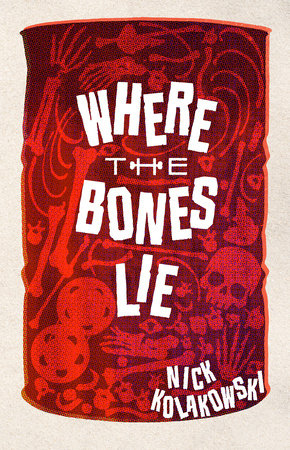
I was hesitant to take my own stab at a California detective novel. Just like I was intimidated by Maclean when writing about wildfires, I was terrified by the prospect of churning out a poor imitation of Chandler or Macdonald or Winslow. In the end, I got over it by leaning hard on my own experience as a journalist; when the narrative of “Where the Bones Lie” bounces from film studio skullduggery in the Hollywood hills to murder in wine country, it follows my own path, through many years and assignments, through the state. Things end with a massive wildfire, because California’s no longer just a place of sunshine and beach—it’s at the ragged edge of climate change, a warning of what our future holds for us all.
But that’s the great thing about the crime genre: it reflects the current times, always evolving, always changing.